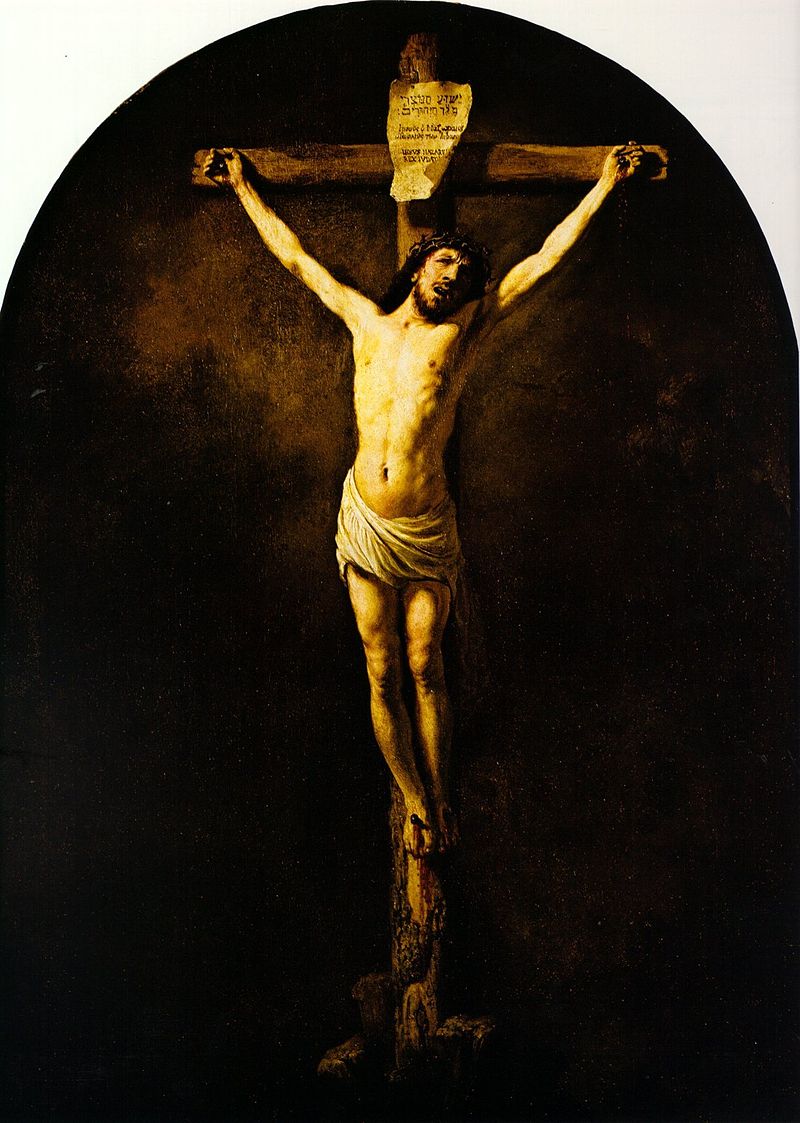
When Jesus had finished all these sayings, he said to his disciples, “You know that after two days the Passover is coming, and the Son of Man will be delivered up to be crucified.
Mt. 26:1,2 (ESV)
In the last post, we saw the events inside Simon’s house: how Mary anointed Jesus, and how the disciples protested her waste of ointment. But the larger drama is found in the same chapter outside the house. It begins when Jesus tells his disciples that he is going to Jerusalem to die. Then the priests plot to kill Jesus. The chapter ends with Judas’ betrayal of Jesus to the priests.
Four times in Matthew’s Gospel Jesus told his disciples he was going to Jerusalem to die. Four times his announcement was met with fear and incomprehension. On one of these occasions, Luke tells us,
But they did not understand this saying, and it was concealed from them, so that they might not perceive it. And they were afraid to ask him about this saying.
Lk. 9:45 (ESV)
Why? Were the disciples just that dense? I doubt it. I suspect they were rather like us. But did anyone hear and understand Jesus’ prediction of his death?
It seems that gentle Mary was the only follower of Christ who “got it.” After the disciples’ unfeeling criticism of her Jesus said,
Why do you trouble the woman? For she has done a beautiful thing to me. In pouring this ointment on my body, she has done it to prepare me for burial.
Mt. 26:10-12 (ESV)
At its deepest layer, this narrative is not about economics, not about heartless men and a sensitive woman, but about a much bigger picture: what God was doing and how no one (except maybe Mary) could see beyond the room. The real tragedy was not the wasted ointment or the hungry poor; it was the disciples’ failure to hear and understand their Lord. The real drama was the redemption of the world by the Son of God before their eyes. It was his death for the sins of the world and his burial anticipated by Mary that was the big issue that day.
As finite creatures with limited vision, we will not see all that God is doing around us. We are often aware of only a few facts which, separated from the bigger picture, make little sense. But we are called, like Mary, to know that God is weaving a beautiful tapestry of which our lives are but threads. Looking at the few threads near us, we may not see what God is doing. But we are called to believe He is greater than that, that what He is doing is beautiful and meaningful beyond our limited vision.
Will you, like Mary, trust Him though you cannot see all?
 This Mind