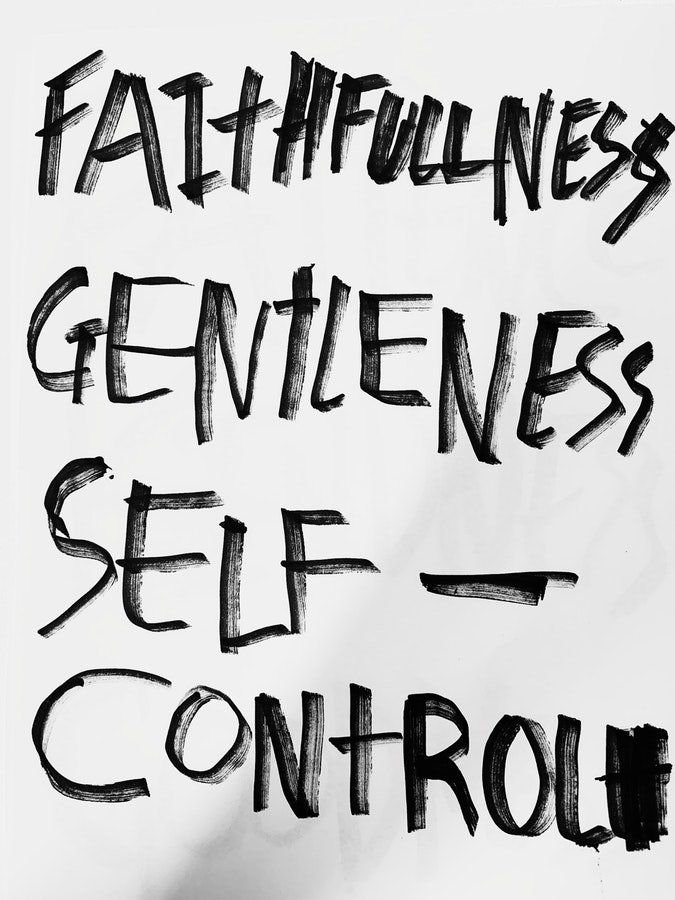
Trust

A bruised reed He will not break and a dimly burning wick He will not extinguish.

Isaiah 42:3

Have you ever had one of those times when everything seemed to go wrong? Or when you felt you had failed and saw no way out? A time when the consequence of a choice seemed impossible to deal with?

One thing you can be sure of: you aren’t alone! All of us at times find ourselves following a path that doesn’t lead where we thought but instead brings new, even greater, problems. Worse still, it may leave us with a sense of utter failure. The question becomes critical – Where do I turn for help in my helplessness?

Isaiah the prophet sought to remind God’s struggling people that it was God who had always protected and cared for them. But they turned away. Isaiah then pointed out the futility of turning to man-made idols to replace God as the authority for finding their way in life. Instead, he told them to trust God and that He will send One who will “take you by the hand and keep you!”

In the chapters that follow, Isaiah prophesied the coming of the Messiah, though He is not named. This prophecy is God’s answer to life’s questions. The answers are found in the teachings, life, death, and resurrection of Jesus Christ who fulfilled God’s promise that first Easter.

Isaiah’s prophecy became a reality in Christ who took our sin and judgment upon Himself. Those who believe in Him find answers to living in the now and anticipation of life everlasting. You may feel bruised, or like a dimly burning wick, but God affirms “I am the Lord, I have called you in righteousness, I will also hold you by the hand and watch over You. . .” All He asks of us is to acknowledge our need, believe and turn to Him in trust, giving ourselves to into His hands.

Where are you looking for life’s answers?

Photo: Fumée by JR Guillaumin
https://creativecommons.org/licenses/by-sa/2.0/
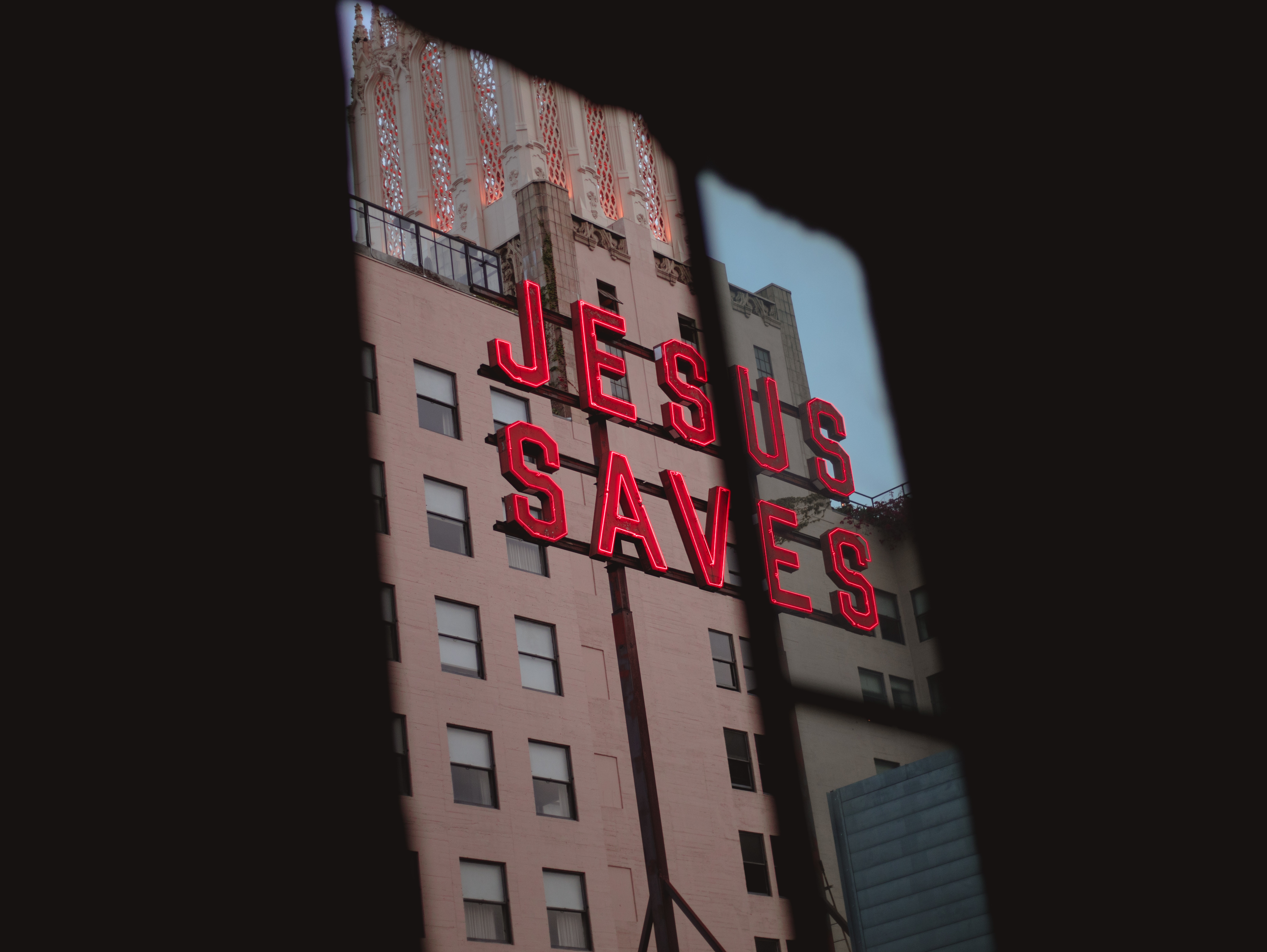
God’s Will For You

God’s Will For You

For this is the will of God, your sanctification. (1 Thess. 4:3 ESV)

Paul in his letter to the Ephesians speaks of them as having been saved. Of the Corinthians, however, he says they are being saved. But in Romans, he speaks of those that shall be saved.

Now I’m sure all who are reading this know that Paul is speaking of the impact of God’s grace when we come to Him in faith. We have been saved if we have truly repented, confessed our sin, and by faith trusted ourselves to Christ. And with all believers, we will be saved on the day of His coming, when our salvation is complete, and we enter the glory of heaven itself. But salvation involves more than redemption and glorification. It involves sanctification!

Paul often declares the importance that marks trusting Christ. And he rejoices at that moment when Jesus will come again, and we may take our place in heaven. But he also calls attention to the fact there is a lifetime to be considered between our becoming His, and His coming again,

Note his words to believers in 1Thess 4:3. “For this is the will of God, your sanctification.” God’s will for each of us is not just “Go to Church on Sunday.” We are each called, in our uniqueness to serve Him. When we turn from the world to Him, the Holy Spirit begins God’s work in us that we may be set apart for His purposes and Glory. This is the beginning of a lifetime journey of spiritually growing and becoming His new creation. Paul defines sanctification like this, “He who began a good work in you will perfect it until the day of Christ Jesus.”

What is our part in all this? In John 17 Jesus addresses this question in His prayer for those He is sending into the world. He asks the Father saying, “Sanctify them in the truth; Your word is truth.” But He doesn’t mean just listening to a sermon or reading a bit in the Bible. Sanctification involves listening, as Jesus admonished, “having ears to hear.” It calls for prayer that seeks God’s wisdom, and asks the Spirit to open the eyes of our heart so whatever our circumstance, we may understand, trust Him and in His strength, as His witnesses, mature, worship and live in the joy of His love.

The question: am I living His will?

–Photo by Jason Betz on Unsplash

Truth

You will know the truth, and the truth will set you free.

Jn. 8:32 ESV

Have you ever seen a truth table? It is an exciting tool used in fields like math and logic. Its purpose is to determine, through symbolic representation, the final truth-value of any compound statement. It can be complicated if you include all the possibilities but stick with me, the heart of it isn’t complicated at all.

The key idea of the truth table is simply this: the truth or falseness of any factual statement depends on the truth or falseness of its parts. For instance, as I write there is a can on my desk which is filled with nuts. That is a compound statement of fact. Now to be a statement both conditions must be true, i.e., there must be a can setting on my desk, and it must be full of nuts. If the can isn’t there, or if it is there, but empty, then the statement itself is false. That it is partially true confuses the issue but does not make the statement true. If I look at the truth table for this set of relationships it looks like this:

  1. True + True = True
  2. False + True = False
  3. True + False = False
  4. False + False = False

What interests me is this: The true is obviously true (l above) and the false obviously false (4). However, statements of partial truth (as in 2 & 3 of the table) are ultimately false even if entirely true in one part. Often these are difficult and confusing to deal with because the false is obscured by alignment with what is true. The can is setting on my desk. You can see it if you look. But what is in it is not so obvious. (And now I’m going to put this can away so I won’t eat any more of the nuts! Maybe full is no longer the best word.)

Now if you’re still with me, you’re probably saying, “So what?” Well, I think there are several so whats which force themselves on Christians. For instance, consider the danger in holding to unexamined truth. Whether there are nuts in the can on my desk is no big deal and can be left unexamined. But whether you are building your life, home, marriage, career and eternity on what is true, is a BIG DEAL! No one structures his life on the false. Our problem is being sucked in by the partially true.

According to Jesus, when we know the truth it will set us free. (John 8:32) Recognize the depth of this statement. Jesus assumes that truth really exists and provides bedrock underpinning for life. It stands as something that resides in the core of existence and forms a base for that existence. If you know this, it’s freeing. BUT partial truth is always a distortion and consequently, false! It cannot set us free. It can only enslave us by tying our life to the unreal.

The depth of another statement Jesus made comes into focus here too. The Christian life cannot be a compound of true and false. Jesus said “No one can serve two masters…You cannot serve God and mammon.” It is easy to see why. The final value of the compounding of true and false is false. That is how creation works! And the challenge is right here.
Don’t be fooled by partial truth. Sometimes the error is difficult to see. It is usually easier to leave the truths we build our lives on unexamined. But the truth table should jerk us back to reality. The false distorts the true to the point of falseness. Set for your goal nothing less than God’s absolute truth!

(January, 1987, Ojai CA)

Self Control

Self Control

Many seem to think that to trust God is to lose your freedom and be kept from knowing life’s joys. But Paul saw the faith life differently. We can see this when he writes to encourage Galatian believers and remind them “it was for freedom that Christ set us free.”

This truth is present throughout scripture. God doesn’t, nor has He ever, forced obedience on mankind. Having been created in His image, we are free to make choices when confronted with other ways to approach life. But He also made it clear we may choose, but are responsible for the choices we make. When the pressure, expectations or something that sets off our drives seems so high, we sense that somehow we must get control of ourselves. Some may, of course, take the way that is easy or exciting.

To help us, God gives clear directions for choosing the way. If we decide, by weighing our choice to see if it fits with His ways, He promises the decision made will lead to a life free and full of purposeful meaning. If his way is ignored; however, He warns that we will find ourselves dealing with the results. Things that seemed so tremendous or exciting will suddenly prove to be burdensome and have the consequence that can take control of our future.

So how do we make choices? How can we decide when seemingly it’s impossible to weigh all the potential fallout of choice at the moment we have to choose?

Paul’s answer comes after reminding believers to trust God as they live with the world’s pressures. His way to choose rightly is merely this, “I say, walk by the Spirit. Live each step guided by the One that activates God’s truth in our hearts as we trust Him. Then at the moment of decision, He points the way and gives us self-control that we might choose and know life at it’s fullest.

Who controls you?

Spectator

I began this new year as many of you by watching the Rose Parade. As beautiful as it is, I must admit that for me there quickly comes the point of saturation when all the bands, horses and floats begin to run together. After that, I go into overload, lose my concentration, and everything becomes a blur of words and color. This year when that point came I let the parade become background. From then on it received an occasional glance while I turned my primary attention to a more immediate project of personal interest.

There is something sad about that. I mean, when you consider the months of planning and preparing, the weeks of ordering and organizing, the days (and nights) of detailed intricate gluing and pasting by hundreds of people, it would seem unthinkable that anyone could treat this great spectacular as only background noise. For me, it was essentially that. It wasn’t that I didn’t like it or think that it was nice. It was simply that I had made no personal investment in it. It pleased me but didn’t involve me. For those who were involved, who had worked hard to put it all together and knew the struggles and problems overcome, this was New Year’s Day. Most were probably too tired even to watch the football game!

That’s the way life is. When we invest ourselves in something, it becomes more than background noise for us. At the same time, it is hard for us to understand why other people can treat something so important in our eyes with what is essentially indifference. If anything, these uninformed “spectators” often are unjustly critical. They fail to appreciate all that has been accomplished, and at the same time feel free to point out flaws and make critical comments about things of which they have little knowledge. The “onlooker” may quickly lose interest or become critical to an extreme, primarily because he has nothing invested and little at stake except for personal pleasure. There is a principle here that we must not miss; excitement, interest and concerned responsibility grow in direct proportion to personal involvement. The “parade watcher” can never
know the same excitement or sense of accomplishment as the participant, nor can his criticisms ever be as valid as those of the person whose first concern is to realize the goal.

Some people treat the moving of God in His Church as a kind of background noise for their lives. It is worthy of only an occasional glance, often subject to uninformed criticism and sometimes treated as simply another of the passing parades that are staged for their pleasure. In consequence, they never catch the real excitement. Their venture into faith remains at the level of spectatorship.

Jesus said, ” … where your treasure is there will your heart be also.” (Mat. 6:21) This statement has been associated mostly with wealth, but the context will show that it is much broader. The principle simply stated: what you involve and invest your life in will be the thing that grips your heart. I would offer a challenge for the new year. Refuse to be a Sunday spectator. Seriously involve yourself in the study of God’s Word, serving Him and being part of the Body of Christ which He is using to build His Church in this place. I can’t say it will be easy, but I will guarantee it will be exciting and satisfying.

–Ojai, 1987

Freedom

Freedom

That your goodness would not be by compulsion but of your own free will.

Philemon 14

Paul’s letter to Philemon tells us of a runaway slave, Onesimus, who ended up with Paul in Rome. How he made it to Rome without being caught is unknown. Neither do we know how he came to be with Paul.

What is clear from the letter is that he became a Christian. Still, he was guilty of a capital crime. According to Roman law, a master had total power over a slave, including the power of death.

We do know that Philemon helped Paul establish the church in Colossae where he lived. It seems possible that Onesimus and Paul had met there. His conversion, along with Paul’s mentoring, evidently led him to realize that if he was committed to God, he could not live as a fugitive.

Paul’s letter was to be carried to Colossae by Onesimus in hopes Philemon would take him back. Paul wanted Philemon to understand that in this they were now brothers in Christ, not Master and slave. Still, we can be sure that for Onesimus it must have been frightening to think about returning to Colossae to face his master.

Paul used this little letter to challenge both these men to live God’s way rather than the world’s. For Onesimus, it was a critical test of his commitment to a new life in Christ. In taking this letter to his master, facing possible death, he became a witness to the boldness that is ours by faith that trusts all to God.

For Philemon, it became a matter of right choice. Paul never challenges his rights as Master of a runaway slave. Instead, he says that though his authority as an apostle and their friendship might give him the right to tell him what to do, such was not his intention. Rather, he wanted the new life Philemon had found in Christ to guide his choice as a witness to living God’s way, not the world’s.

How do you choose whom you accept?

Worry

Photo by Kat Jayne from Pexels

Trust in the LORD, and do good; dwell in the land and befriend faithfulness.

Ps. 37:3 ESV

It’s hard to know how to respond when the world around us rejects God and declares its way the only acceptable way to live. Even more difficult to accept is that calling evil good and good evil seems to have no consequence. Evil prospers while Good struggles and is declared out of touch with reality.

In Psalm 37 David responds to the insecurity and concern of God’s people regarding what it means to live in such a world. His commitment to God had been attacked, and he felt the pressure even though he was a king. No doubt this helped prepare him to write this psalm and point the way that others might understand God’s way forward.

He begins by telling them the futility of getting angry. “Don’t fret,” he says. Today “fret,” is used mostly about an irritated or anxious child. Honestly, I’ve wondered if he was saying, “Stop acting like a child!” But the heart of what he says is found in verses 3 and 5.

There David calls upon them to meet the world’s challenge by trusting God and doing good. He emphasizes this in verse 5, “Commit your way to the Lord; trust also in Him, and He will do it.”

Regardless of what the world may do as it trusts its own opinions and worships its own ideas, believers are called to live in this world, cultivate faithfulness to God, and do good. We know that if we commit all to him, trust him, and rest in him, it will be just as David says in closing this psalm:

The LORD helps them and delivers them; he delivers them from the wicked and saves them, because they take refuge in him.

Ps. 37:40 ESV

Who do you trust and what are you cultivating?

She did What She Could

She has done what she could; she has anointed my body beforehand for burial. (Mk. 14:8 ESV)

Knowing that the Passover would lead to his crucifixion, Jesus, with the apostles, rather than going into Jerusalem, for two days were guests in a home not far away in Bethany. While there, a significant incident occurred. You will doubtless remember it.

A woman came to the table where they were eating. (Matthew and John tell us this was Mary, Lazarus’ sister) She carried with her an alabaster vial of pure nard, a very expensive imported aromatic oil. In this case, the filled vial cost three years wages for the average worker. She came to Jesus, broke that vial, then poured the oil over His head anointing Him with it.

Read more

Prepared

boy child clouds kid
Photo by Porapak Apichodilok on Pexels.com

The first thing I learned after joining the Boy Scout’s was the scout motto, “Be Prepared.” And that’s certainly a great thing for a 12-year-old to learn. But to plan, prepare or set goals, demands first knowing what’s involved, and also our purpose for what we decide.

Read more

He Will Do It

man sitting on edge facing sunset
Photo by Abhiram Prakash on Pexels.com

David wrote the 37th Psalm in a time when Israel was feeling the pressure of a world that had turned it’s back on God. As King, he wrote to encourage God’s people as they sang and worshiped on the Sabbath. He calls upon them not to get angry, be anxious, or try to hide. Instead, to respond by delighting in the Lord, trusting Him, always seeking to live faithfully for the world to see.

Read more