Happiness

Happiness

“I just want you to be happy,” says a parent to her child.

The Declaration of Independence celebrates our pursuit of happiness. It is our birthright. But is it the reason for which we were made? Is the purpose of our existence the absence of pain and the satisfaction of desire? Our modern culture answers with a resounding, “Yes!”

The United Nations publishes a World Happiness Report every year. The United States has trailed the western world and declined each year since about 1990. And since 2011 happiness, however, measured, has plummeted for teens. If happiness is the human project, we are failing!

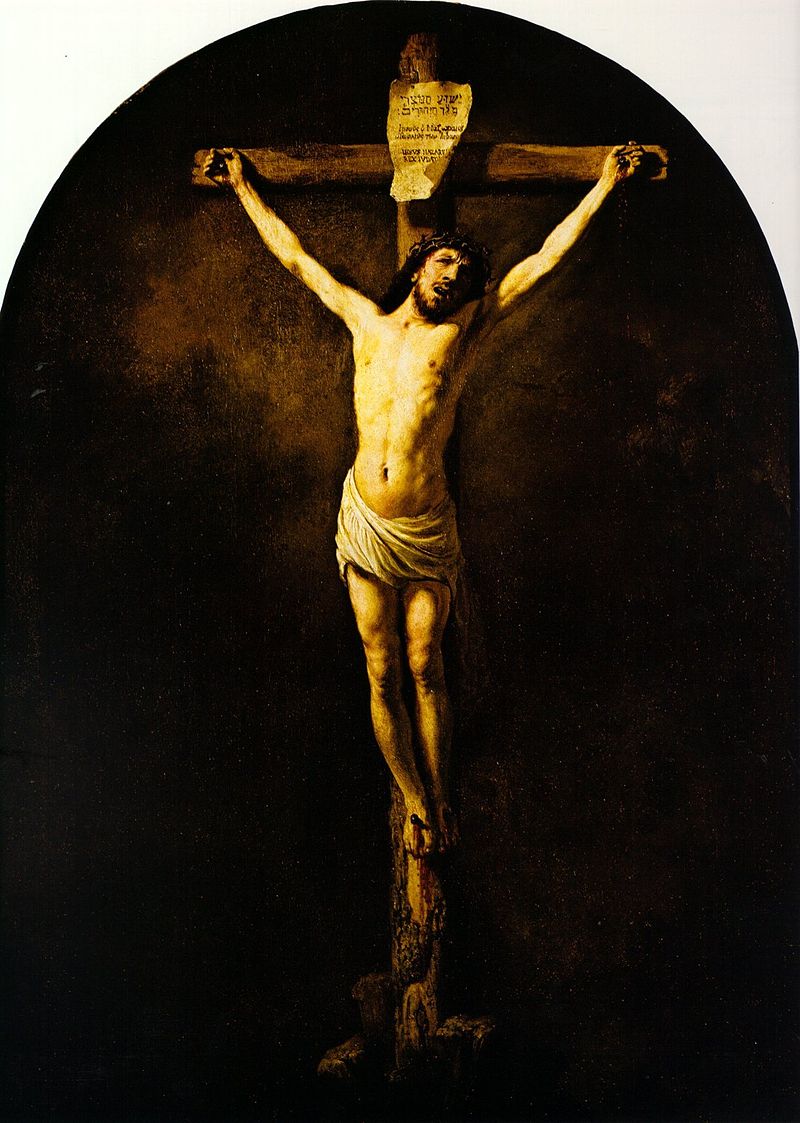
And when we turn to the Bible, we hardly find the word happy in the pages of any English Bible. What is that all about? Look at Jesus. The word happy is never used of him. But instead, he was the man of sorrows. In the garden where he prayed and “his sweat became like great drops of blood falling down to the ground” (Lk. 22:44 ESV) the word happy just seems so wrong. But the Bible tells us of something more solid and substantial that filled his soul: joy.

looking to Jesus, the founder and perfecter of our faith, who for the joy that was set before him endured the cross…

Heb. 12:2 ESV

Our lives are seldom—may I say never?—free from those circumstances that cause us grief, pain, sorrow, or heartbreak. Life is filled with toil, and not only does our work not always bring about the desired happiness, but it all must be done again tomorrow. It sounds grim, doesn’t it? But that is perhaps we have set our sights not too high, but too low. C. S. Lewis said,

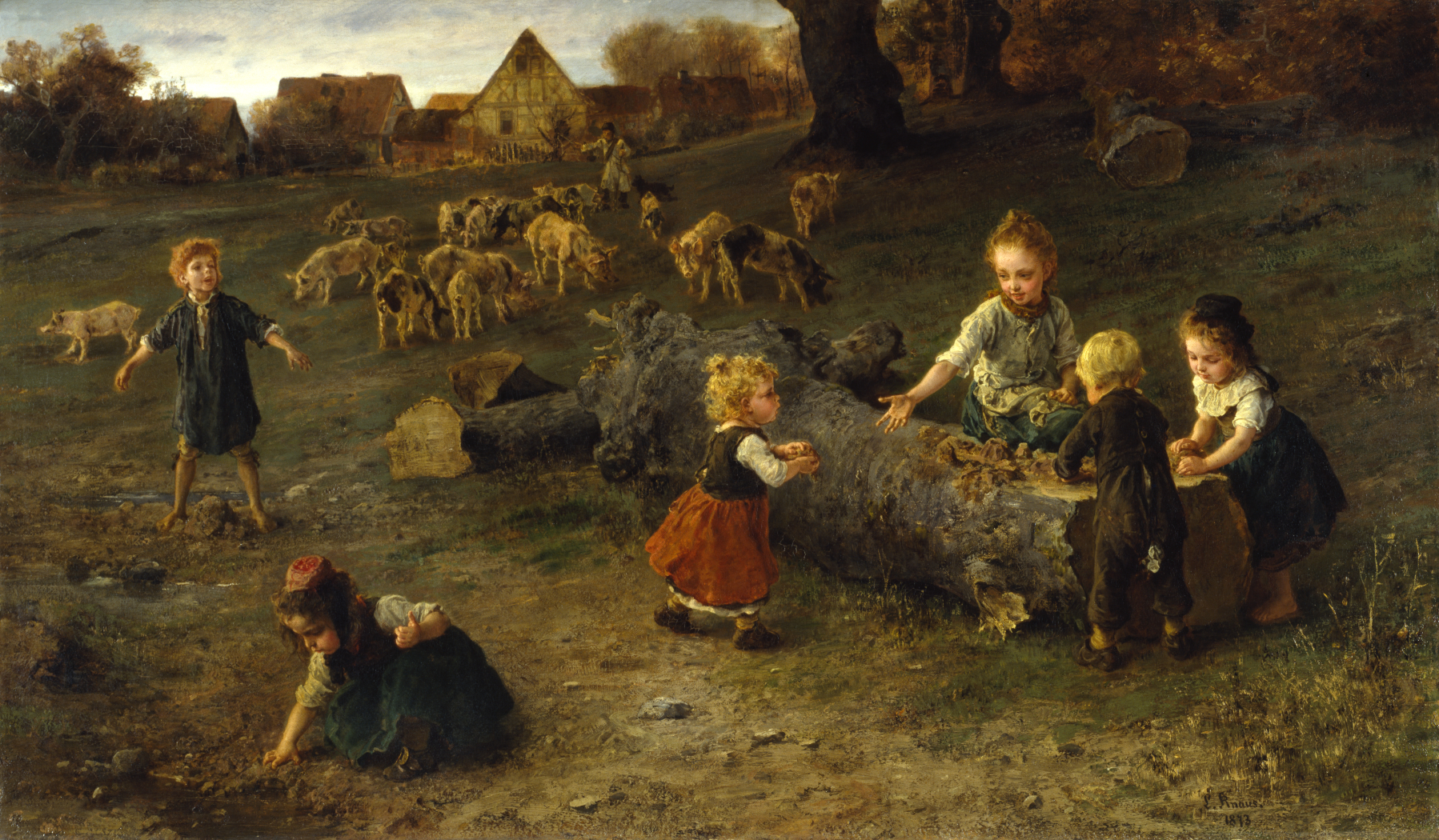
It would seem that Our Lord finds our desires not too strong, but too weak. We are half-hearted creatures, fooling about with drink and sex and ambition when infinite joy is offered us, like an ignorant child who wants to go on making mud pies in a slum because he cannot imagine what is meant by the offer of a holiday at the sea. We are far too easily pleased.

C. S. Lewis, The Weight of Glory, and Other Addresses

Jesus invites us—no, commands us—to follow him. It is not a path of mere happiness, the freedom from concern and pain, but a path with a cross like his. But it is also a path filled with his own joy. Let’s explore that in the next posts!

Mud Pies, by Ludwig Knaus

Worship

Worship

A guest post from Pastor Eric Irwin, Covenant Presbyterian Church, Issaquah, WA

• This is the time of year that people cease to worship and use their weekends elsewhere and otherwise. On vacations, I’m always tempted in this way. Always. Though true worship is never first about us, what we do instead usually is. That’s why, ultimately, alternative worship (like the golden calf) doesn’t satisfy: we were saved that we might no longer live for ourselves (2 Cor 5:15), an ethic that finds its first, highest, and best expression in worship. It’s in losing our lives that we find them. So what follows are biblical reasons for the importance of worship in the lives of God’s people, then after that a few practical thoughts.

  1. For centuries, Christians could not know what God was saying to them unless they went to worship. The two were inseparable: worship and God’s voice. Individuals didn’t own Bible manuscripts; they were far too expensive. Go all the way back, for example, to the churches at Philippi or Ephesus — you could only know what Paul and the Holy Spirit were saying to you by going to worship and hearing the letter written for you (among others). By this, God organized the formative years of the Church around worship. Not a mistake.
  2. Following the exodus, Israel’s most significant watershed moment was a failure of corporate worship (golden calf, Ex. 32). The people were hungry to ascribe honor and worth, but they were also easily misguided. The moment was made all the more possible because of a weak leader (Aaron). So good or bad, the key issue was worship.
  3. The crucial first five books of the Bible are much more about loving God in corporate worship — along with the character, content, and practice of that worship — than any other single topic. Nothing else is even close. Worship was the center of belonging to God, and this centrality became a given for the followers of Christ (see below #5 & #6).
  4. Israel’s commitment to worship was so fundamental to life that when the Temple was destroyed by Babylon, the Synagogue system — think of it as decentralized Jewish worship — arose almost immediately.
  5. Luke tells us it was Jesus’ personal habit to attend synagogue worship (Luke 4:16), then uses the same word in Acts (17:2) to say it was Paul’s custom as well. As with all Jews, corporate worship was woven into the pattern of weekly life, and life itself was a cycle of work and worship, not work and play. 
  6. As with Jesus, Paul’s ministry was famously attached to the place of worship (see Acts 14:1; 18:19; 19:8; 18:8; 13:42; 17:10). What we tend to forget is there was a period that Christians continued to meet in synagogues before being forced out. When finally they were forced out, Christians used synagogue worship as their foundation. 
  7. The greatest, most unforgettable picture of Glory is the people of God gathered at his feet in his throne room, worshiping and proclaiming his glory (Rev. 4). This is what ultimate reality looks like. To argue it has no bearing on the present is to misunderstand why God has already given us such pictures of our future. Worship is our permanent identity. 

• A few practical thoughts.

  1. The very last thing Satan wants you to do is come and worship. Satan wants you to worship yourself, just as he worships himself. On Sunday mornings you will find yourself tired, slightly sick (headache, nausea), swayed by an unwilling child, needing to finish some project, irritated by something at the church, or any one of a hundred things Satan will invent in the final hour before you have to leave. If you want a stunning picture of this battle, read pp. 10-14 in C.S. Lewis’s Perelandra.
  2. You will draw permission from other people who skip worship a lot, especially those who have some leadership role. We subconsciously want to assuage our guilt. Bad examples are helpful. (If you are a leader, I encourage you to take this before the Lord for ten honest minutes.)
  3. We expect little of ourselves and call it grace. Bonhoeffer wrote a whole book about this. Grace is glorious, free, and freeing. But like all ideas we hold in our hearts and minds, it is also subject to the Enemy’s work of distortion. Don’t be afraid to expect more of yourself, as Christ allows it. Expect holy habits, including worship. 

A Prayer of Billy Graham
“Heavenly Father, we come before you today to ask your forgiveness and to seek your direction and guidance. We know Your Word says, ‘Woe to those who call evil good,’ but that is exactly what we have done. We have lost our spiritual equilibrium and reversed our values. We have exploited the poor and called it the lottery. We have rewarded laziness and called it welfare. We have killed our unborn and called it choice. We have shot abortionists and called it justified. We have neglected to discipline our children and called it building self-esteem. We have abused power and called it politics. We have coveted our neighbor’s possessions and called it ambition. We have polluted the air with profanity and pornography and called it freedom of expression. We have ridiculed the time-honored values of our forefathers and called it enlightenment. Search us, Oh God, and know our hearts; cleanse us from every sin and Set us free. Amen!”

Photo by Dan Whitfield from Pexels

Out of Darkness

Out of Darkness a Light Shines

The people who walked in darkness have seen a great light; those who dwelt in a land of deep darkness, on them has light shone.

Isa. 9:2 ESV

This verse from Isaiah usually finds its home in Advent. But I think it is equally at home in Holy Week.

Darkness and light figure prominently in the Bible. Think of Genesis 1 where light and dark, once separated, alternate in a dance that continues to this day. It is as if you cannot have light without darkness.

David, in the Shepherd’s Psalm, speaks of the valley of the shadow of death. These are the very words used in Isaiah 9 (deep darkness or darkness of death). The Lord is with him and will bring him once again into the light.

John speaks of darkness and light in a battle at the beginning of his Gospel:

The light shines in the darkness, and the darkness has not overcome it.

Jn. 1:5 ESV

And at Jesus’ crucifixion darkness covers the land.

Now from the sixth hour there was darkness over all the land until the ninth hour.

Matt. 27:45 ESV

The same is echoed in the ancient Christian Tenebrae service during the last three days before Easter. It is a service of shadows and often ends in total darkness and, after a loud noise, silence.

Why the darkness over the land? Why the darkness of Tenebrae?

For this reason: Jesus walked our valley of the shadow of death. He entered the utter darkness of the grave and our own dark Hell. Why?

To shine in victory over the grave, death, and Hell for us! Hallelujah!

Complaining 2

Complaining

My God, my God, why have you forsaken me?

Matt. 27:46 ESV

The five books of Moses take their Hebrew names from the first words of the book. So Genesis is called bereshith (in the beginning). The name we know, Genesis, comes from the first word in the Latin Vulgate translation. Similarly, the name of Exodus in Hebrew is just the first word which is in English These. All that to say that the Jews would refer to the books of the Pentateuch by their first words.

Jesus in agony on the cross cries out, “My God, my God, why have you forsaken me?” Is he accusing the Father of abandonment? Does he cry out in despair? Has he resigned himself to death without rescue?

What did those standing near the cross—John, Jesus’ mother, and the other Marys—understand when Jesus spoke? His words would have brought Psalm 22 in its entirety to mind. There was no need for Jesus to say more.

Psalm 22 is a personal lament, a very deep lament. It contains a word-picture of the crucifixion. But it does not end in despair, but hope. Jesus did not focus only on his cruel pain and humiliation, but on his Father’s rescue, and his ultimate victory after his resurrection.

I will tell of your name to my brothers; amid the congregation I will praise you: For he has not despised or abhorred the affliction of the afflicted, and he has not hidden his face from him but has heard when he cried to him.

Ps. 22:22, 24 ESV

The laments of the Bible permit us to cry out to God from the depths of pain and loss. God is not offended when his children cry out to him in complaint. But like Psalm 22, our lament in meant to end not in despair or accusation but hope, in praise, and in glory.

So make the laments of Scripture your pattern for prayer. Speak plainly to the Lord of your pain, your fears, your worries, your sorrow. But follow that prayer with praise and confidence that the Lord will rescue you, keep you, guard you as the apple of his eye.

Photo by Nathan Cowley from Pexels

Complaining

Complaining

Righteous are you, O LORD when I complain to you; yet I would plead my case before you. Why does the way of the wicked prosper? Why do all who are treacherous thrive?

JER. 12:1 ESV

“Stop complaining!” is a phrase every parent has spoken to their whiny children. And you can hear it on any day in any public place. Our culture considers not complaining a virtue. It is just downright impolite to whine. And complaining is not safe. I should never complain to my superiors if I want my career to go anywhere.

And indeed, we should never complain to God! No, that would be the height of arrogance! It’s not even safe.

But when we read the Psalms, we hear complaining voices and no criticism from God. Over half of the Psalms are lament, a complaint to God. And the Psalms are the prayer book of God’s people. And the Holy Spirit inspired them.

Our Father is not like us. His store of patience is not short. He does not take it amiss when we complain to Him. The lament Psalms are his permission to pray this way, and we should.

But what assurance do we have that it is OK to pour out our complaint to God? Let me offer just one:

Come to me, all who labor and are heavy laden, and I will give you rest.

mATT. 11:28 esv

Jesus invites the worn down, the downtrodden, the hurting, the tired, the discouraged, the sad, to come to Him. And when we come are we then to be silent? No!

My Dad once told me his favorite hymn was I Must Tell Jesus:

 I must tell Jesus all of my trials;
I cannot bear these burdens alone;
In my distress He kindly will help me;
He ever loves and cares for His own.

I must tell Jesus!
I must tell Jesus!
I cannot bear my burdens alone;
I must tell Jesus!
I must tell Jesus!
Jesus can help me, Jesus, alone.

I think my Dad felt Jesus was the only one to whom he could talk plainly.

Do not fear! You can pour out your heart to Jesus. He will hear and not rebuke you. He will kindly take you, his child, into his arms.

Start complaining!

Photo by Samuel Martins on Unsplash

Useful

For if these qualities are yours and are increasing, they render you neither useless nor unfruitful in the true knowledge of our Lord Jesus Christ.

2 Peter 1:8 NASB

I am a Puddleglum. I confess it. I am prone to melancholia, and now and then, especially when responsibilities and worries weigh heavily, I will think, “I am quite a useless critter after all.”

The thought does not last long, as I know better, but it still creeps into my consciousness unasked. As we grow older we seem to accumulate failures, disappointments, dashed hopes, and derailed dreams. And a Puddleglum will weight those more heavily than the more real, solid joys of life, the gifts that God gives. And, if we are wise, we will not be tricked into believing that fame or wealth or professional accomplishment will answer that thought. So, at the end of the day, that one word often looms in my mind: useless.

Puddleglums like me need reassurance. We need a solid promise. And Peter gives one that is so striking and brilliant that I have trouble wrapping my soul about it:

…if these qualities are yours; you are neither useless nor unfruitful…

In God’s eyes—and they are about the only eyes that matter—we are useful, significant, (famous if you will) if only we are growing in Christ, building little by little.

If you are a Puddleglum like me, I challenge you to memorize this short passage from Peter and use it to encourage yourself when the cares of life weigh heavily.

Left Turns

And let the peace of Christ rule in your hearts, to which indeed you were called in one body. And be thankful.

Col. 3:15 ESV

Dreams are straight, but life is crooked.

Life is full of left turns. None of us find ourselves exactly where we dreamed we might be; perhaps not where we worked hard to be. We were born into a family we did not choose. Necessity may have kept us from the school of our choice or moved us into a trade, not of our choosing. We fall in love with someone we could never have imagined. We have children, all of whom are surprises. We lose our youth and grow old though wishing to stay young.

Anyone past mid-life can tell that story. Life is full of left-hand turns. How does that happen to a child of God? How are we to respond to change and forfeited dreams? Why is life so crooked?

If there were a Bible character who experienced lots of left-hand turns in life, it was Paul. He had planned and schemed to take Christians captive all over the Roman empire and then the Lord arrested him on the road to Damascus. What a turn! Perhaps Paul had dreamt of becoming a revered Rabbi, of a comfortable living in Jerusalem with the respect of everyone who mattered. But, no, God had entirely different plans. What was Paul’s response to all this change in his life?

Thanksgiving!

I thank him who has given me strength, Christ Jesus our Lord, because he judged me faithful, appointing me to his service.

1 Tim. 1:12 ESV

And that should also be the impulse of our heart when God in His providence and wisdom changes the direction of our lives in unexpected (and sometimes uncomfortable) ways.

Join me in practicing thanksgiving as my first response to God’s left-hand turns!

Myopia 2

When Jesus had finished all these sayings, he said to his disciples, “You know that after two days the Passover is coming, and the Son of Man will be delivered up to be crucified.

Mt. 26:1,2 (ESV)

In the last post, we saw the events inside Simon’s house: how Mary anointed Jesus, and how the disciples protested her waste of ointment. But the larger drama is found in the same chapter outside the house. It begins when Jesus tells his disciples that he is going to Jerusalem to die. Then the priests plot to kill Jesus. The chapter ends with Judas’ betrayal of Jesus to the priests.

Four times in Matthew’s Gospel Jesus told his disciples he was going to Jerusalem to die. Four times his announcement was met with fear and incomprehension. On one of these occasions, Luke tells us,

But they did not understand this saying, and it was concealed from them, so that they might not perceive it. And they were afraid to ask him about this saying.

Lk. 9:45 (ESV)

Why? Were the disciples just that dense? I doubt it. I suspect they were rather like us. But did anyone hear and understand Jesus’ prediction of his death?

It seems that gentle Mary was the only follower of Christ who “got it.” After the disciples’ unfeeling criticism of her Jesus said,

Why do you trouble the woman? For she has done a beautiful thing to me. In pouring this ointment on my body, she has done it to prepare me for burial.

Mt. 26:10-12 (ESV)

At its deepest layer, this narrative is not about economics, not about heartless men and a sensitive woman, but about a much bigger picture: what God was doing and how no one (except maybe Mary) could see beyond the room. The real tragedy was not the wasted ointment or the hungry poor; it was the disciples’ failure to hear and understand their Lord. The real drama was the redemption of the world by the Son of God before their eyes. It was his death for the sins of the world and his burial anticipated by Mary that was the big issue that day.

As finite creatures with limited vision, we will not see all that God is doing around us. We are often aware of only a few facts which, separated from the bigger picture, make little sense. But we are called, like Mary, to know that God is weaving a beautiful tapestry of which our lives are but threads. Looking at the few threads near us, we may not see what God is doing. But we are called to believe He is greater than that, that what He is doing is beautiful and meaningful beyond our limited vision.

Will you, like Mary, trust Him though you cannot see all?

Myopia

Now when Jesus was at Bethany in the house of Simon the leper, a woman came up to him with an alabaster flask of very expensive ointment, and she poured it on his head as he reclined at table. And when the disciples saw it, they were indignant, saying, “Why this waste? For this could have been sold for a large sum and given to the poor.”  But Jesus, aware of this, said to them, “Why do you trouble the woman? For she has done a beautiful thing to me. For you always have the poor with you, but you will not always have me. In pouring this ointment on my body, she has done it to prepare me for burial.”

Mt. 26:6-12

Every time I read this passage I am struck by the contrast between the callous comments of the disciples and the tender feelings of the woman for Jesus. John, in his Gospel, tells us their names: the crass comment came from the thief, Judas Iscariot, who regularly stole from the communal purse. The woman was Lazarus’ sister, Mary, whose heart overflowed with gratitude for Jesus.

The disciples dispensed derogatory comments which cost them nothing. Mary poured out a life’s savings in a gift of love for her Master. If Judas was indeed the source of the opposition, we could be sure his concern did not extend beyond his pocket to the poor. Cheap words and little heart contrasted to great heart and expensive love. Many a sermon has been preached with Mary in the spotlight as a model of devotion. “Don’t be like the disciples. Be like Mary!” And there is a lot to be said for that.

And yet, if we read the Gospel carefully, that is not the main point of the passage. If we concentrate our attention on the drama in the room, we will miss the more significant scene outside the room. And as tragic as was the disciples’ heart toward Mary—shame on them!—the greater tragedy lay elsewhere. And it involved the same Mary and all Jesus’ disciples.

Stay tuned for part 2!