Loss


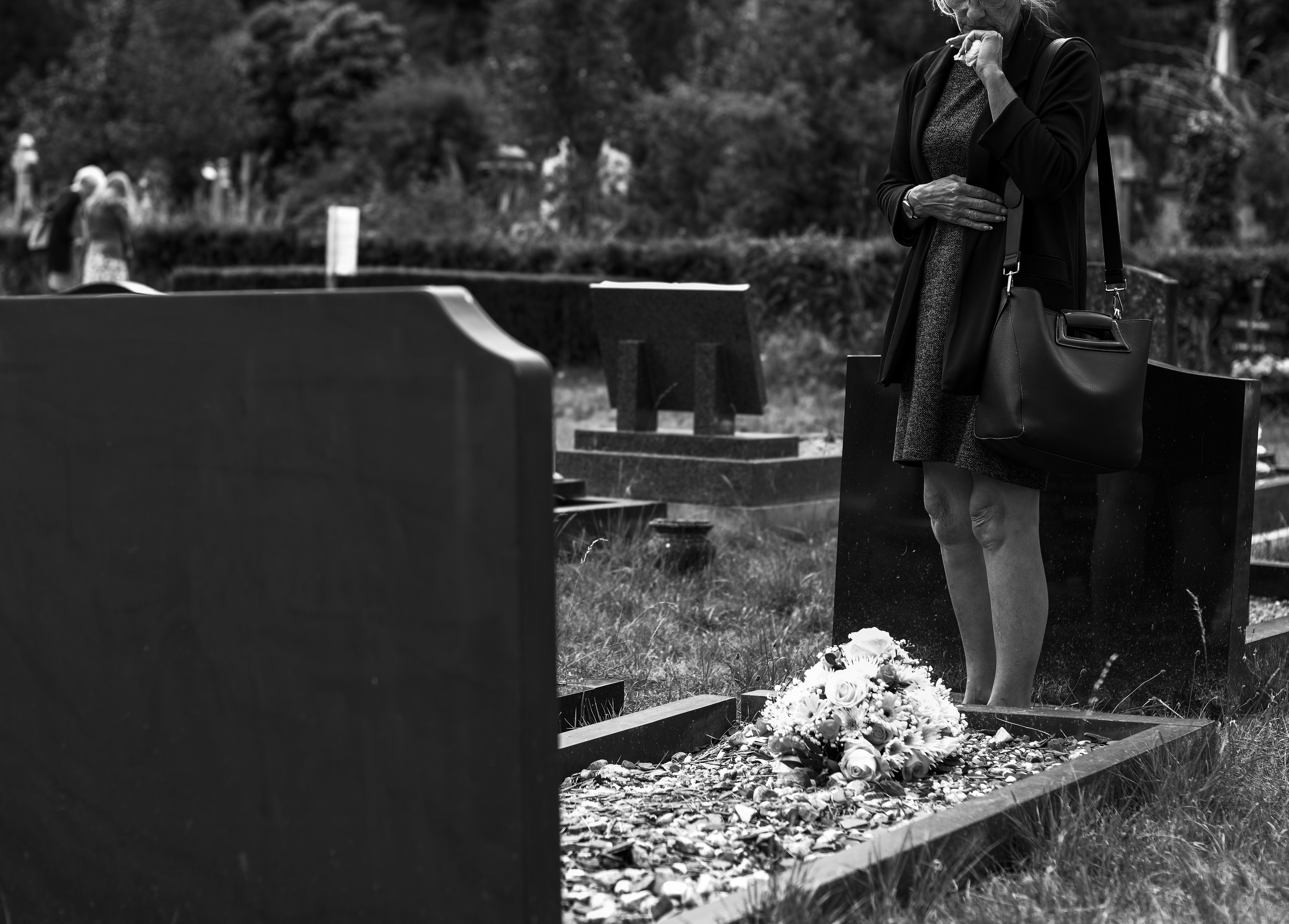
Photo by rawpixel.com from Pexels

Remember how short my time is!
For what vanity you have created all the children of man!
What man can live and never see death?
Who can deliver his soul from the power of Sheol?

Ps. 89:47, 48 ESV


This week a brother-in-arms passed away. Ferd and I served as elders in the same church in the 1980s. His departure is a real blow to his family. And we who knew him as a friend and brother are also grieving. Amid the grief, there rises a sense that his death was just wrong. In the foreground of one of the family’s last pictures of Ferd is Lysa TerKeurst’s book, “It’s Not Supposed to Be This Way.”

Isaac Watts in his masterful metrical Psalms translates the latter part of Psalm 89 this way:

Remember, Lord, our mortal state;
How frail our lives! how short the date!
Where is the man that draws his breath,
Safe from disease, secure from death?
Lord, while we see whole nations die,
Our flesh and sense repine and cry;
Must death forever rage and reign?
Or hast Thou made mankind in vain?

Watts well expresses the Psalmist’s frustration: “Must death forever rage and reign? Or hast Thou made mankind in vain?” It’s not supposed to be this way.

God the Father answered this question in his own Son. “Christ Jesus is the one who died– more than that, who was raised.” (Rom. 8:34 ESV) He defeated sin and death for us. He released us from its rage and reign. He did not make us in vain. And death is naught but the passage into God’s presence because of Jesus.

Here is Judy Hauff’s beautiful setting of Watt’s metrical psalm sung by Bella Voce:

Name

photo: pixabay.com

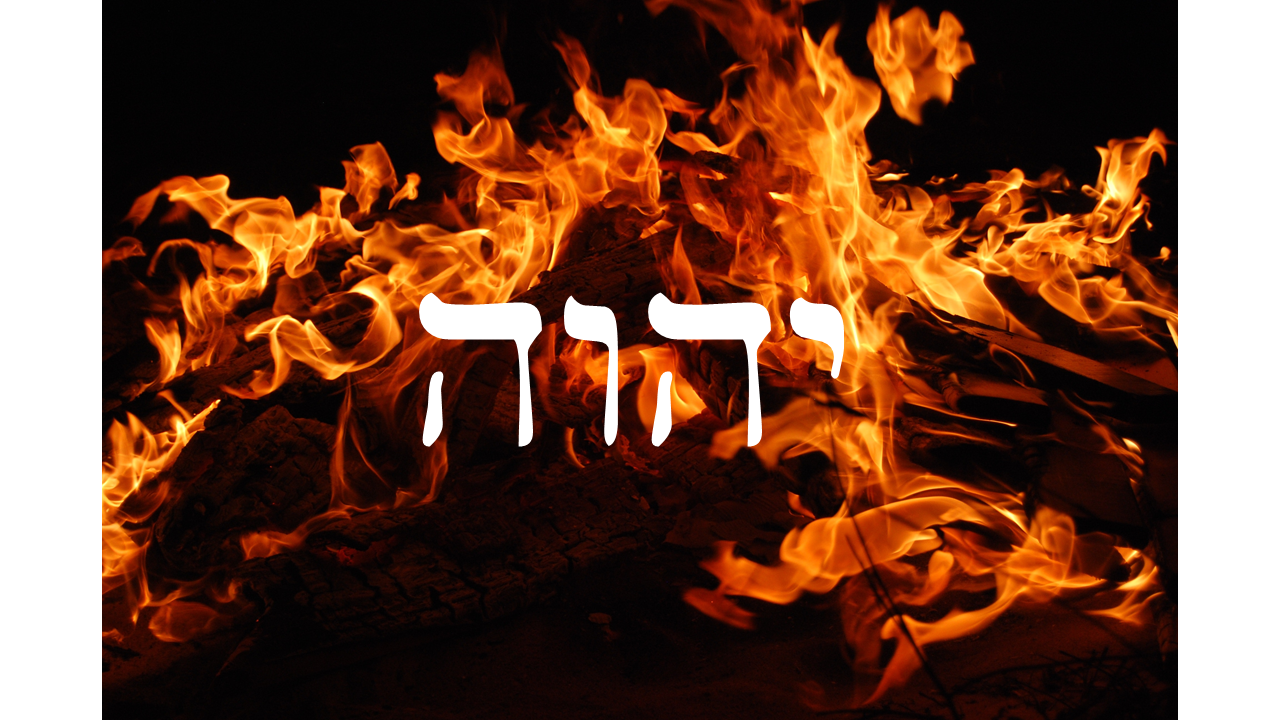
God also said to Moses, “Say this to the people of Israel: ‘The LORD, the God of your fathers, the God of Abraham, the God of Isaac, and the God of Jacob, has sent me to you.’ This is my name forever, and thus I am to be remembered throughout all generations.

Exodus 3:15 ESV

At the burning bush, God interrupted Moses’ life, took him from herding sheep, and set him on a path to rescue Israel from Egypt. And he gave Moses a message for Israel: God’s covenant promise. One ancient commentator said,

…the promise might seem to be obsolete when they had received no assistance, whilst overwhelmed in such an abyss of misery, and on this ground, the faith received from their fathers had undoubtedly grown cold. Wherefore, that they may learn to repose upon it, he calls himself the God of their fathers, and declares, that by this title he will be celebrated forever.

At the beginning and end of his encounter with Moses, God named himself “the God of Abraham, the God of Isaac, and the God of Jacob.” Why? To assure Israel that the God who called them to trust him for rescue from Pharoah was the same God whom their fathers worshiped; that his covenant promises never fail; that his love is indeed everlasting.

But there is more to the name God had chosen. Far more. Think about this with me: God had chosen a name that included the names of three historic individuals. And he had chosen that name forever. The unchangeable God had bound himself in name forever to three men on whom he had placed his love. And into eternity God’s name will include those of Abraham, Isaac, and Jacob.

The writer of Hebrews said, “But as it is, they desire a better country, that is, a heavenly one. Therefore God is not ashamed to be called their God, for he has prepared for them a city.” (Heb. 11:16 ESV)

This is the kind of God we serve: he is not content only to rescue his people, to show them kindness when they are suffering. He will do more: he will bind himself to them forever. He is just the kind of God who would someday join himself eternally to our flesh and soul in Jesus Christ.

Two Questions

And he said, “I am the God of your father, the God of Abraham, the God of Isaac, and the God of Jacob.” And Moses hid his face, for he was afraid to look at God.
Then the LORD said, “I have surely seen the affliction of my people who are in Egypt and have heard their cry because of their taskmasters. I know their sufferings,
Come, I will send you to Pharaoh that you may bring my people, the children of Israel, out of Egypt.”
But Moses said to God, “Who am I that I should go to Pharaoh and bring the children of Israel out of Egypt?”
He said, “But I will be with you, and this shall be the sign for you, that I have sent you: when you have brought the people out of Egypt, you shall serve God on this mountain.”
Then Moses said to God, “If I come to the people of Israel and say to them, ‘The God of your fathers has sent me to you,’ and they ask me, ‘What is his name?’ what shall I say to them?”
God said to Moses, “I AM WHO I AM.” And he said, “Say this to the people of Israel: ‘I AM has sent me to you.'”
God also said to Moses, “Say this to the people of Israel: ‘The LORD, the God of your fathers, the God of Abraham, the God of Isaac, and the God of Jacob, has sent me to you.’ This is my name forever, and thus I am to be remembered throughout all generations.

Exodus 3:6-15 ESV

When God called to Moses out of the burning bush, he told Moses that he would deliver his people from slavery and he was sending Moses to Pharaoh to accomplish that, Moses had two questions for God. And these are the same two questions we should ask of God and hear his answer.

Moses’ first question was, “Who am I?” In his own eyes, he was a nobody, disqualified by his past, and living in a nowhere land. He was a loser, and there was no future for him.

God did not answer by telling Moses he was some special snowflake. No, but he told Moses that he would be with him. It was God who made Moses special. So it is with you and me. God has not promised to make us into superheroes, but he has promised to be with us. As David walks through the valley of death’s shadow, he does not fear because “Thou art with me.” As the church in each age strives to serve Jesus by proclaiming his Gospel around this globe, she does not fear because Jesus said, “Look! I am with you always, even to the end of the age.”

The second question Moses asked God was, “Who are you?” Literally, he asked, “What is your name?” Many commentators say Moses knew the children of Jacob would say, “We have been crying out to the God of our fathers for all these years, but he has done nothing. Who is this God that he is now going to deliver us from the most powerful king on earth?”

And God answered, “I AM WHO I AM.” Much ink has been spilled explaining that sentence, but at bottom, God said he is the ultimate reality in the universe. No circumstance, no human king, can cast a shadow on him. Nothing changes him, but he changes everything. He is the only reality, the only I AM.

We need to hear this and incorporate it into our hearts, souls, and minds. Who are we? Nothing, but God is with us! Who is God? Everything, the unchangeable, ultimate reality who will keep every promise and accomplish all he has set out to do.

Do you believe it?
Resolution

opened bible on wooden surfaca
Photo by rawpixel.com on Pexels.com

Happy New Year!

This is the time many of us make resolutions to do things differently in the new year: diet, exercise, organization. Many of those resolutions are aimed at shaping our bodies. But we need resolutions that will shape our souls as well. One worth making above all others is to read through the Bible this next year. My favorite plan for many years has been M’Cheyne’s. Check out M’Cheyne’s Bible Reading Plan.

May I suggest though that we need to read the Gospels continually. J. I. Packer wrote this many years ago:

[We can] correct woolliness of view as to what Christian commitment involves, by stressing the need for constant meditation on the four gospels, over and above the rest of our Bible reading: for gospel study enables us both to keep our Lord in clear view and to hold before our minds the relational frame of discipleship to him.

The doctrines on which our discipleship rests are clearest in the epistles, but the nature of discipleship itself is most vividly portrayed in the gospels.

Some Christians seem to prefer the epistles as if this were a mark of growing up spiritually; but really this attitude is a very bad sign, suggesting that we are more interested in theological notions than in fellowship with the Lord Jesus in person.

We should think, rather, of the theology of the epistles as preparing us to understand better the disciple relationship with Christ that is set forth in the gospels, and we should never let ourselves forget that the four gospels are, as has often and rightly been said, the most wonderful books on earth.

—J. I. Packer, Keep in Step with the Spirit: Finding Fullness in Our Walk with God (Grand Rapids, MI: Baker, 2005), p. 70, 71.

O Come!

bottice3

All seven of the ancient O Antiphons are collected beautifully in the Christmas hymn, O Come, O Come, Emmanuel, with lyrical translation by John Mason Neale (1851). Take time today to meditate on these together, perhaps sing the hymn, and then REJOICE!

1 O come, O come, Immanuel,
and ransom captive Israel
that mourns in lonely exile here
until the Son of God appear.

Refrain:
Rejoice! Rejoice! Immanuel
shall come to you, O Israel.

2 O come, O Wisdom from on high,
who ordered all things mightily;
to us the path of knowledge show
and teach us in its ways to go. Refrain

3 O come, O come, great Lord of might,
who to your tribes on Sinai’s height
in ancient times did give the law
in cloud and majesty and awe. Refrain

4 O come, O Branch of Jesse’s stem,
unto your own and rescue them!
From depths of hell your people save,
and give them victory o’er the grave. Refrain

5 O come, O Key of David, come
and open wide our heavenly home.
Make safe for us the heavenward road
and bar the way to death’s abode. Refrain

6 O come, O Bright and Morning Star,
and bring us comfort from afar!
Dispel the shadows of the night
and turn our darkness into light. Refrain

7 O come, O King of nations, bind
in one the hearts of all mankind.
Bid all our sad divisions cease
and be yourself our King of Peace. Refrain

O Emmanuel

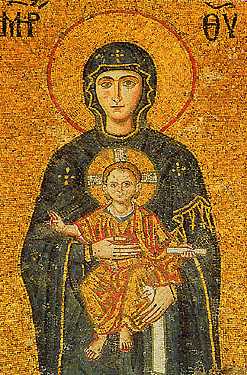
Theotokos

Therefore, the Lord himself will give you a sign. Behold, the virgin shall conceive and bear a son, and shall call his name Immanuel. (Isa. 7:14 ESV)

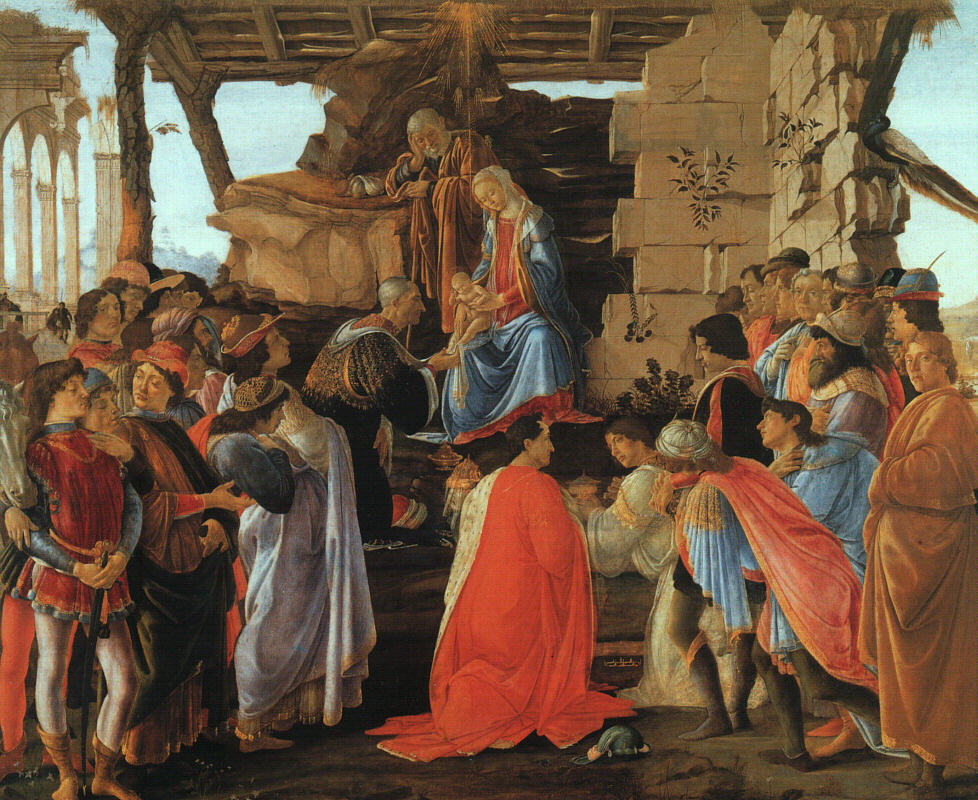
Matthew, in his Gospel, tells us the Hebrew name Immanuel (or Emmanuel) means God with us. There is perhaps no greater promise in Scripture than that. God told Jacob, “Fear not, for I am with you and will bless you….” God made the same promise to Jacob’s offspring by the prophets Isaiah and Jeremiah. Jesus told his disciples that “I am with you always, to the end of the age.” But the climax of this promise in the history of God’s people was the giving of His Son as a child from the womb of Mary. There is no more intimate connection between man and God than that. In the deepest sense of the prophet’s words, Jesus was the promise of God incarnate, God with us.

Rejoice!

O Emmanuel, our king and our lawgiver,
the hope of the nations and their Savior:
Come and save us, O Lord our God.

O Rex Gentium

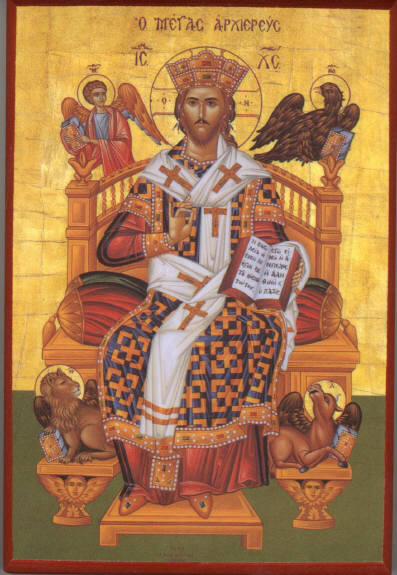
christ-enthroned

Behold, I am the one who has laid as a foundation in Zion, a stone, a tested stone, a precious cornerstone, of a sure foundation. (Isa. 28:16 ESV)

In the sixth O Antiphon, Christ is called the King the nations long for. And he is the cornerstone of a new building. He is the king who gets his hands dirty forming a new people from clay. And he redeems us.

Rejoice!

O King of the nations, and their desire,
the cornerstone making both one:
Come and save the human race,
which you fashioned from clay.

O Oriens

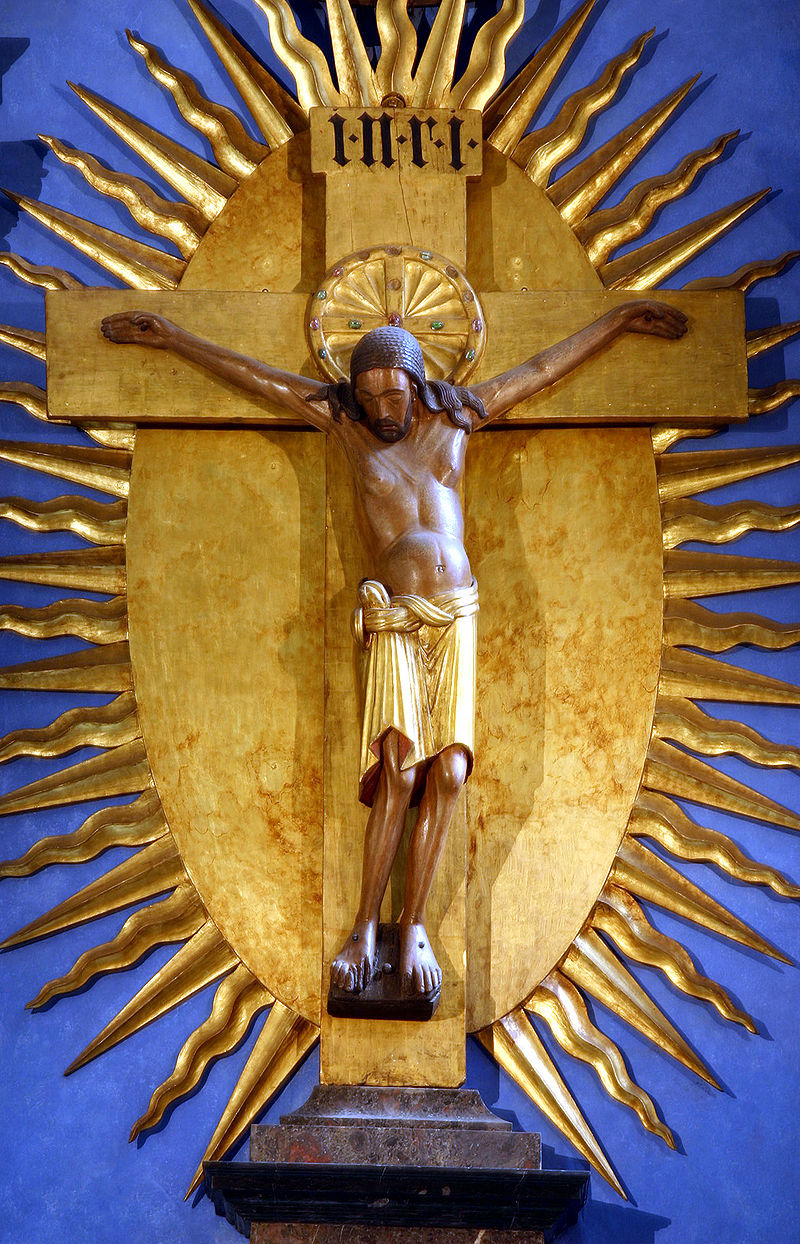
800px-Gerokreuz_full_20050903

Oriens in Latin is the Morning Star, the Dayspring. It calls to mind this verse from Malachi:

But for you who fear my name, the sun of righteousness shall rise with healing in its wings. (Mal. 4:2 ESV)

It is significant that this antiphon is sung on the winter solstice, what Donne called “the year’s midnight.” Day now begins with the sign of the morning star, the spring of the day, the Oriens. So Christ has brought light and life at just the darkest moment. And so He will do for you if you but call on Him.

O Dayspring,
splendor of light eternal and sun of righteousness:
Come and enlighten those who dwell in darkness and the shadow o death.

O Clavis David

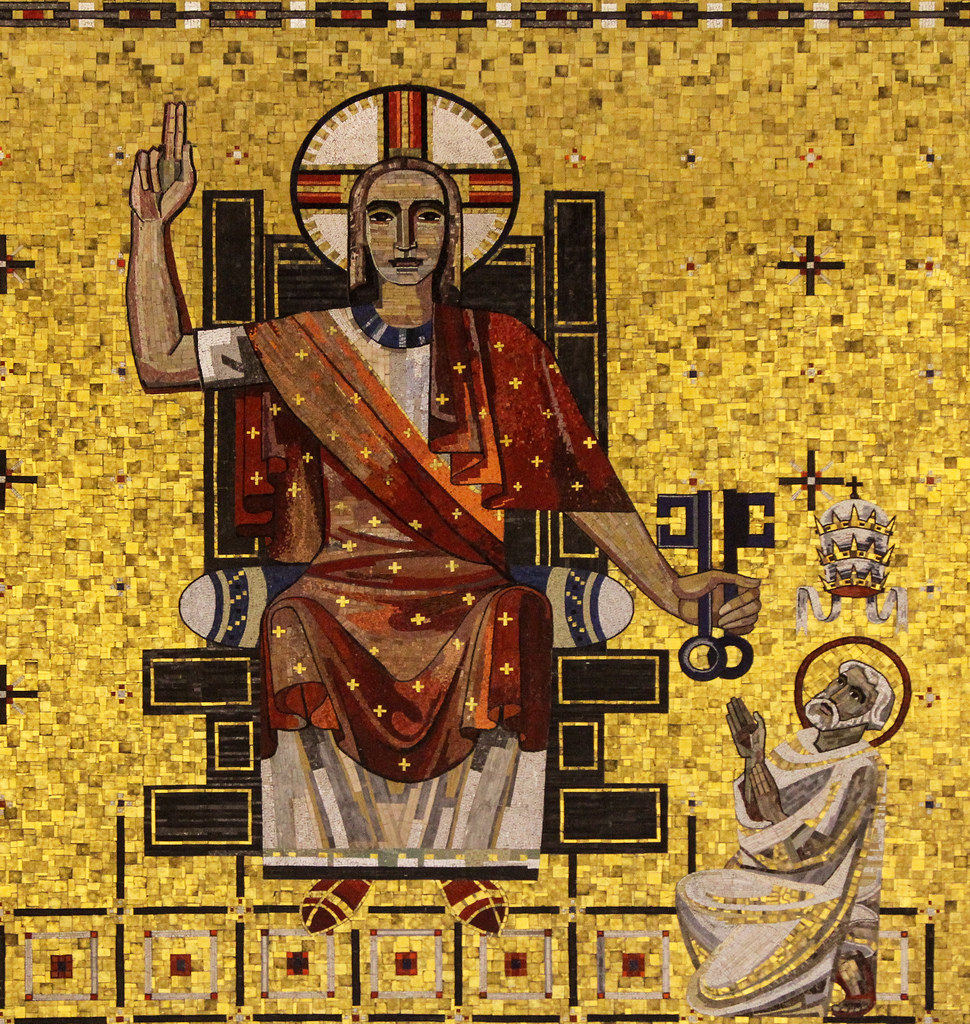
38468681964_0a2b9b35cf_b

Isaiah said, “And I will place on his shoulder the key of the house of David. He shall open, and none shall shut, and he shall shut, and none shall open.” (Isa. 22:22 ESV)

The hymn O Come, O Come, Emmanuel has this line in verse 5,

O come, O Key of David, come
and open wide our heavenly home.

As the Key of David, Jesus opens to us the way to Heaven, and no one can bar that entrance. He is our access to the Father, and no one can close that way. Rejoice!

O Key of David and scepter of the House of Israel;
you open and no one can shut;
you shut and no one can open:
Come and lead the prisoners from the prison house,
those who dwell in darkness and the shadow of death.