Self Control

Self Control

Many seem to think that to trust God is to lose your freedom and be kept from knowing life’s joys. But Paul saw the faith life differently. We can see this when he writes to encourage Galatian believers and remind them “it was for freedom that Christ set us free.”

This truth is present throughout scripture. God doesn’t, nor has He ever, forced obedience on mankind. Having been created in His image, we are free to make choices when confronted with other ways to approach life. But He also made it clear we may choose, but are responsible for the choices we make. When the pressure, expectations or something that sets off our drives seems so high, we sense that somehow we must get control of ourselves. Some may, of course, take the way that is easy or exciting.

To help us, God gives clear directions for choosing the way. If we decide, by weighing our choice to see if it fits with His ways, He promises the decision made will lead to a life free and full of purposeful meaning. If his way is ignored; however, He warns that we will find ourselves dealing with the results. Things that seemed so tremendous or exciting will suddenly prove to be burdensome and have the consequence that can take control of our future.

So how do we make choices? How can we decide when seemingly it’s impossible to weigh all the potential fallout of choice at the moment we have to choose?

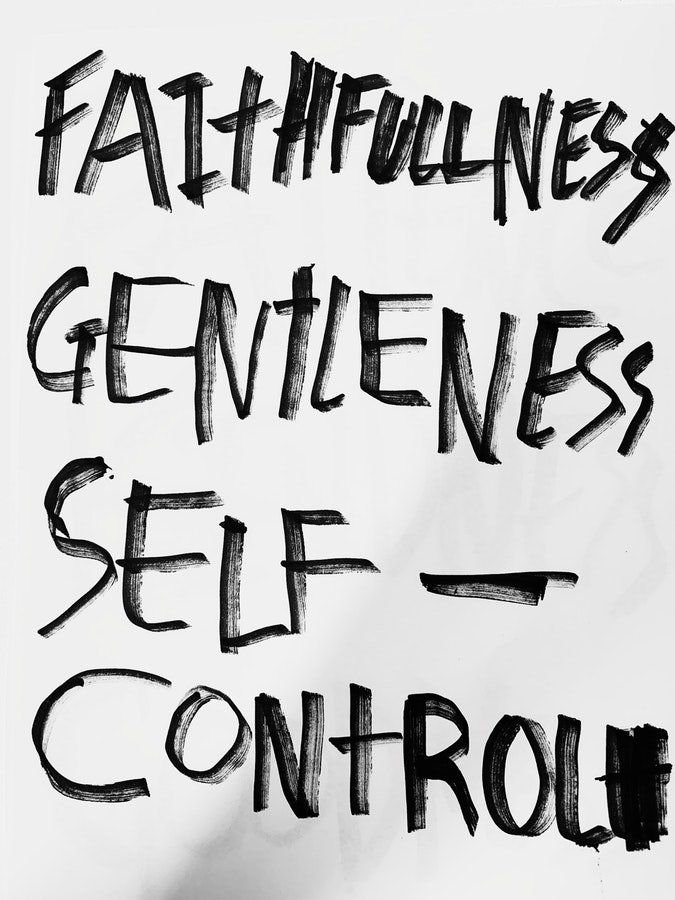
Paul’s answer comes after reminding believers to trust God as they live with the world’s pressures. His way to choose rightly is merely this, “I say, walk by the Spirit. Live each step guided by the One that activates God’s truth in our hearts as we trust Him. Then at the moment of decision, He points the way and gives us self-control that we might choose and know life at it’s fullest.

Who controls you?
Left Turns

And let the peace of Christ rule in your hearts, to which indeed you were called in one body. And be thankful.

Col. 3:15 ESV

Dreams are straight, but life is crooked.

Life is full of left turns. None of us find ourselves exactly where we dreamed we might be; perhaps not where we worked hard to be. We were born into a family we did not choose. Necessity may have kept us from the school of our choice or moved us into a trade, not of our choosing. We fall in love with someone we could never have imagined. We have children, all of whom are surprises. We lose our youth and grow old though wishing to stay young.

Anyone past mid-life can tell that story. Life is full of left-hand turns. How does that happen to a child of God? How are we to respond to change and forfeited dreams? Why is life so crooked?

If there were a Bible character who experienced lots of left-hand turns in life, it was Paul. He had planned and schemed to take Christians captive all over the Roman empire and then the Lord arrested him on the road to Damascus. What a turn! Perhaps Paul had dreamt of becoming a revered Rabbi, of a comfortable living in Jerusalem with the respect of everyone who mattered. But, no, God had entirely different plans. What was Paul’s response to all this change in his life?

Thanksgiving!

I thank him who has given me strength, Christ Jesus our Lord, because he judged me faithful, appointing me to his service.

1 Tim. 1:12 ESV

And that should also be the impulse of our heart when God in His providence and wisdom changes the direction of our lives in unexpected (and sometimes uncomfortable) ways.

Join me in practicing thanksgiving as my first response to God’s left-hand turns!

Spectator

I began this new year as many of you by watching the Rose Parade. As beautiful as it is, I must admit that for me there quickly comes the point of saturation when all the bands, horses and floats begin to run together. After that, I go into overload, lose my concentration, and everything becomes a blur of words and color. This year when that point came I let the parade become background. From then on it received an occasional glance while I turned my primary attention to a more immediate project of personal interest.

There is something sad about that. I mean, when you consider the months of planning and preparing, the weeks of ordering and organizing, the days (and nights) of detailed intricate gluing and pasting by hundreds of people, it would seem unthinkable that anyone could treat this great spectacular as only background noise. For me, it was essentially that. It wasn’t that I didn’t like it or think that it was nice. It was simply that I had made no personal investment in it. It pleased me but didn’t involve me. For those who were involved, who had worked hard to put it all together and knew the struggles and problems overcome, this was New Year’s Day. Most were probably too tired even to watch the football game!

That’s the way life is. When we invest ourselves in something, it becomes more than background noise for us. At the same time, it is hard for us to understand why other people can treat something so important in our eyes with what is essentially indifference. If anything, these uninformed “spectators” often are unjustly critical. They fail to appreciate all that has been accomplished, and at the same time feel free to point out flaws and make critical comments about things of which they have little knowledge. The “onlooker” may quickly lose interest or become critical to an extreme, primarily because he has nothing invested and little at stake except for personal pleasure. There is a principle here that we must not miss; excitement, interest and concerned responsibility grow in direct proportion to personal involvement. The “parade watcher” can never
know the same excitement or sense of accomplishment as the participant, nor can his criticisms ever be as valid as those of the person whose first concern is to realize the goal.

Some people treat the moving of God in His Church as a kind of background noise for their lives. It is worthy of only an occasional glance, often subject to uninformed criticism and sometimes treated as simply another of the passing parades that are staged for their pleasure. In consequence, they never catch the real excitement. Their venture into faith remains at the level of spectatorship.

Jesus said, ” … where your treasure is there will your heart be also.” (Mat. 6:21) This statement has been associated mostly with wealth, but the context will show that it is much broader. The principle simply stated: what you involve and invest your life in will be the thing that grips your heart. I would offer a challenge for the new year. Refuse to be a Sunday spectator. Seriously involve yourself in the study of God’s Word, serving Him and being part of the Body of Christ which He is using to build His Church in this place. I can’t say it will be easy, but I will guarantee it will be exciting and satisfying.

–Ojai, 1987

Myopia 2

When Jesus had finished all these sayings, he said to his disciples, “You know that after two days the Passover is coming, and the Son of Man will be delivered up to be crucified.

Mt. 26:1,2 (ESV)

In the last post, we saw the events inside Simon’s house: how Mary anointed Jesus, and how the disciples protested her waste of ointment. But the larger drama is found in the same chapter outside the house. It begins when Jesus tells his disciples that he is going to Jerusalem to die. Then the priests plot to kill Jesus. The chapter ends with Judas’ betrayal of Jesus to the priests.

Four times in Matthew’s Gospel Jesus told his disciples he was going to Jerusalem to die. Four times his announcement was met with fear and incomprehension. On one of these occasions, Luke tells us,

But they did not understand this saying, and it was concealed from them, so that they might not perceive it. And they were afraid to ask him about this saying.

Lk. 9:45 (ESV)

Why? Were the disciples just that dense? I doubt it. I suspect they were rather like us. But did anyone hear and understand Jesus’ prediction of his death?

It seems that gentle Mary was the only follower of Christ who “got it.” After the disciples’ unfeeling criticism of her Jesus said,

Why do you trouble the woman? For she has done a beautiful thing to me. In pouring this ointment on my body, she has done it to prepare me for burial.

Mt. 26:10-12 (ESV)

At its deepest layer, this narrative is not about economics, not about heartless men and a sensitive woman, but about a much bigger picture: what God was doing and how no one (except maybe Mary) could see beyond the room. The real tragedy was not the wasted ointment or the hungry poor; it was the disciples’ failure to hear and understand their Lord. The real drama was the redemption of the world by the Son of God before their eyes. It was his death for the sins of the world and his burial anticipated by Mary that was the big issue that day.

As finite creatures with limited vision, we will not see all that God is doing around us. We are often aware of only a few facts which, separated from the bigger picture, make little sense. But we are called, like Mary, to know that God is weaving a beautiful tapestry of which our lives are but threads. Looking at the few threads near us, we may not see what God is doing. But we are called to believe He is greater than that, that what He is doing is beautiful and meaningful beyond our limited vision.

Will you, like Mary, trust Him though you cannot see all?

Myopia

Now when Jesus was at Bethany in the house of Simon the leper, a woman came up to him with an alabaster flask of very expensive ointment, and she poured it on his head as he reclined at table. And when the disciples saw it, they were indignant, saying, “Why this waste? For this could have been sold for a large sum and given to the poor.”  But Jesus, aware of this, said to them, “Why do you trouble the woman? For she has done a beautiful thing to me. For you always have the poor with you, but you will not always have me. In pouring this ointment on my body, she has done it to prepare me for burial.”

Mt. 26:6-12

Every time I read this passage I am struck by the contrast between the callous comments of the disciples and the tender feelings of the woman for Jesus. John, in his Gospel, tells us their names: the crass comment came from the thief, Judas Iscariot, who regularly stole from the communal purse. The woman was Lazarus’ sister, Mary, whose heart overflowed with gratitude for Jesus.

The disciples dispensed derogatory comments which cost them nothing. Mary poured out a life’s savings in a gift of love for her Master. If Judas was indeed the source of the opposition, we could be sure his concern did not extend beyond his pocket to the poor. Cheap words and little heart contrasted to great heart and expensive love. Many a sermon has been preached with Mary in the spotlight as a model of devotion. “Don’t be like the disciples. Be like Mary!” And there is a lot to be said for that.

And yet, if we read the Gospel carefully, that is not the main point of the passage. If we concentrate our attention on the drama in the room, we will miss the more significant scene outside the room. And as tragic as was the disciples’ heart toward Mary—shame on them!—the greater tragedy lay elsewhere. And it involved the same Mary and all Jesus’ disciples.

Stay tuned for part 2!

Freedom

Freedom

That your goodness would not be by compulsion but of your own free will.

Philemon 14

Paul’s letter to Philemon tells us of a runaway slave, Onesimus, who ended up with Paul in Rome. How he made it to Rome without being caught is unknown. Neither do we know how he came to be with Paul.

What is clear from the letter is that he became a Christian. Still, he was guilty of a capital crime. According to Roman law, a master had total power over a slave, including the power of death.

We do know that Philemon helped Paul establish the church in Colossae where he lived. It seems possible that Onesimus and Paul had met there. His conversion, along with Paul’s mentoring, evidently led him to realize that if he was committed to God, he could not live as a fugitive.

Paul’s letter was to be carried to Colossae by Onesimus in hopes Philemon would take him back. Paul wanted Philemon to understand that in this they were now brothers in Christ, not Master and slave. Still, we can be sure that for Onesimus it must have been frightening to think about returning to Colossae to face his master.

Paul used this little letter to challenge both these men to live God’s way rather than the world’s. For Onesimus, it was a critical test of his commitment to a new life in Christ. In taking this letter to his master, facing possible death, he became a witness to the boldness that is ours by faith that trusts all to God.

For Philemon, it became a matter of right choice. Paul never challenges his rights as Master of a runaway slave. Instead, he says that though his authority as an apostle and their friendship might give him the right to tell him what to do, such was not his intention. Rather, he wanted the new life Philemon had found in Christ to guide his choice as a witness to living God’s way, not the world’s.

How do you choose whom you accept?

Loss


Photo by rawpixel.com from Pexels

Remember how short my time is!
For what vanity you have created all the children of man!
What man can live and never see death?
Who can deliver his soul from the power of Sheol?

Ps. 89:47, 48 ESV


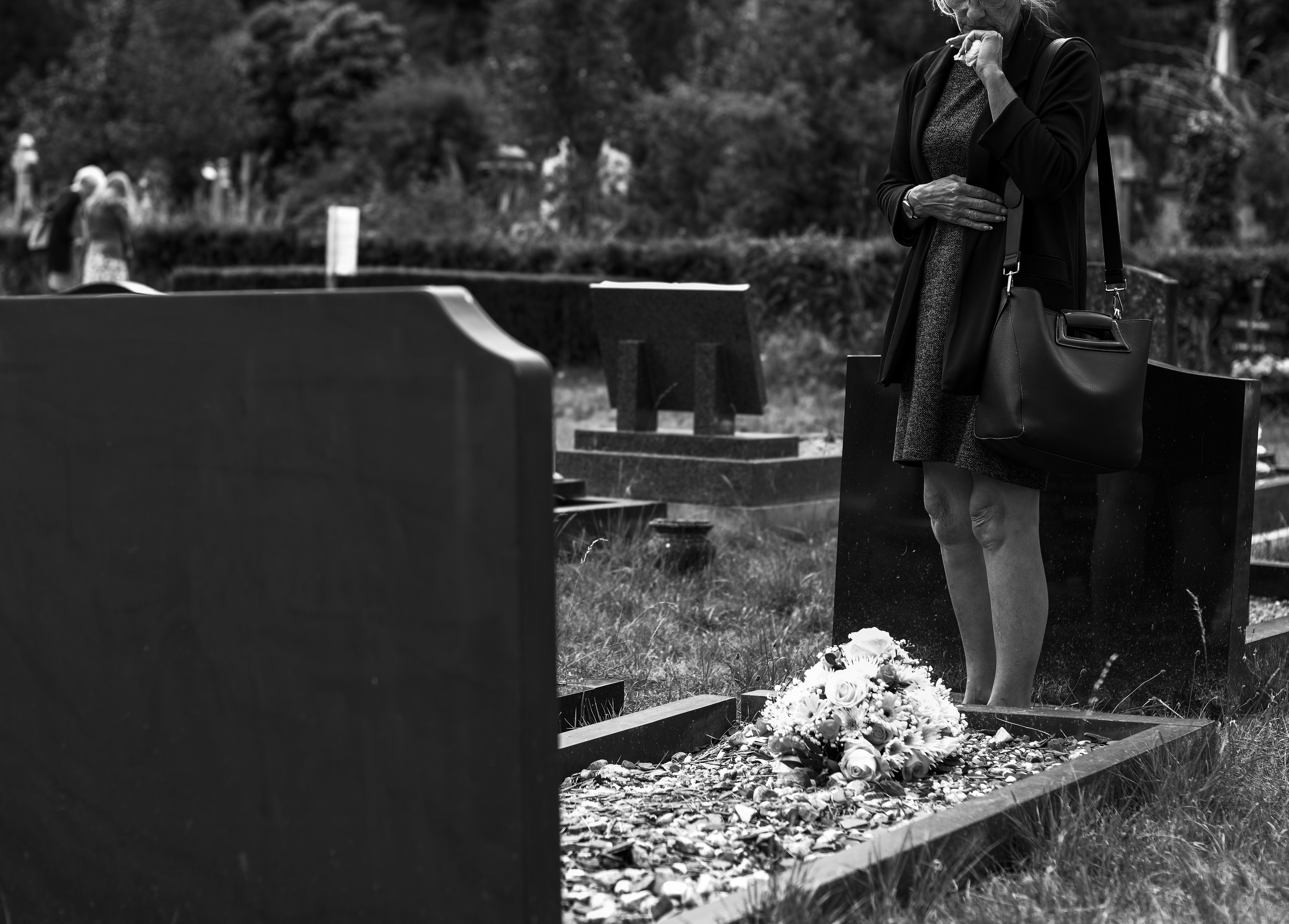
This week a brother-in-arms passed away. Ferd and I served as elders in the same church in the 1980s. His departure is a real blow to his family. And we who knew him as a friend and brother are also grieving. Amid the grief, there rises a sense that his death was just wrong. In the foreground of one of the family’s last pictures of Ferd is Lysa TerKeurst’s book, “It’s Not Supposed to Be This Way.”

Isaac Watts in his masterful metrical Psalms translates the latter part of Psalm 89 this way:

Remember, Lord, our mortal state;
How frail our lives! how short the date!
Where is the man that draws his breath,
Safe from disease, secure from death?
Lord, while we see whole nations die,
Our flesh and sense repine and cry;
Must death forever rage and reign?
Or hast Thou made mankind in vain?

Watts well expresses the Psalmist’s frustration: “Must death forever rage and reign? Or hast Thou made mankind in vain?” It’s not supposed to be this way.

God the Father answered this question in his own Son. “Christ Jesus is the one who died– more than that, who was raised.” (Rom. 8:34 ESV) He defeated sin and death for us. He released us from its rage and reign. He did not make us in vain. And death is naught but the passage into God’s presence because of Jesus.

Here is Judy Hauff’s beautiful setting of Watt’s metrical psalm sung by Bella Voce:

Worry

Photo by Kat Jayne from Pexels

Trust in the LORD, and do good; dwell in the land and befriend faithfulness.

Ps. 37:3 ESV

It’s hard to know how to respond when the world around us rejects God and declares its way the only acceptable way to live. Even more difficult to accept is that calling evil good and good evil seems to have no consequence. Evil prospers while Good struggles and is declared out of touch with reality.

In Psalm 37 David responds to the insecurity and concern of God’s people regarding what it means to live in such a world. His commitment to God had been attacked, and he felt the pressure even though he was a king. No doubt this helped prepare him to write this psalm and point the way that others might understand God’s way forward.

He begins by telling them the futility of getting angry. “Don’t fret,” he says. Today “fret,” is used mostly about an irritated or anxious child. Honestly, I’ve wondered if he was saying, “Stop acting like a child!” But the heart of what he says is found in verses 3 and 5.

There David calls upon them to meet the world’s challenge by trusting God and doing good. He emphasizes this in verse 5, “Commit your way to the Lord; trust also in Him, and He will do it.”

Regardless of what the world may do as it trusts its own opinions and worships its own ideas, believers are called to live in this world, cultivate faithfulness to God, and do good. We know that if we commit all to him, trust him, and rest in him, it will be just as David says in closing this psalm:

The LORD helps them and delivers them; he delivers them from the wicked and saves them, because they take refuge in him.

Ps. 37:40 ESV

Who do you trust and what are you cultivating?

Name

photo: pixabay.com

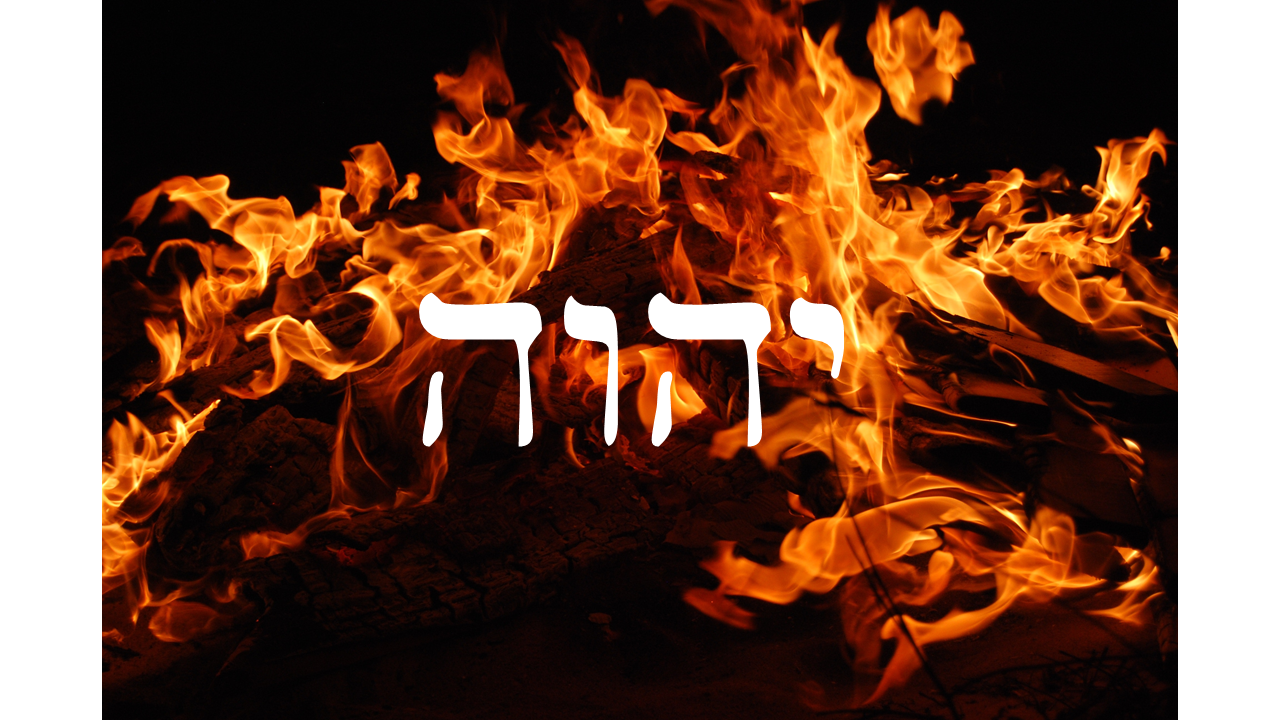
God also said to Moses, “Say this to the people of Israel: ‘The LORD, the God of your fathers, the God of Abraham, the God of Isaac, and the God of Jacob, has sent me to you.’ This is my name forever, and thus I am to be remembered throughout all generations.

Exodus 3:15 ESV

At the burning bush, God interrupted Moses’ life, took him from herding sheep, and set him on a path to rescue Israel from Egypt. And he gave Moses a message for Israel: God’s covenant promise. One ancient commentator said,

…the promise might seem to be obsolete when they had received no assistance, whilst overwhelmed in such an abyss of misery, and on this ground, the faith received from their fathers had undoubtedly grown cold. Wherefore, that they may learn to repose upon it, he calls himself the God of their fathers, and declares, that by this title he will be celebrated forever.

At the beginning and end of his encounter with Moses, God named himself “the God of Abraham, the God of Isaac, and the God of Jacob.” Why? To assure Israel that the God who called them to trust him for rescue from Pharoah was the same God whom their fathers worshiped; that his covenant promises never fail; that his love is indeed everlasting.

But there is more to the name God had chosen. Far more. Think about this with me: God had chosen a name that included the names of three historic individuals. And he had chosen that name forever. The unchangeable God had bound himself in name forever to three men on whom he had placed his love. And into eternity God’s name will include those of Abraham, Isaac, and Jacob.

The writer of Hebrews said, “But as it is, they desire a better country, that is, a heavenly one. Therefore God is not ashamed to be called their God, for he has prepared for them a city.” (Heb. 11:16 ESV)

This is the kind of God we serve: he is not content only to rescue his people, to show them kindness when they are suffering. He will do more: he will bind himself to them forever. He is just the kind of God who would someday join himself eternally to our flesh and soul in Jesus Christ.

Two Questions

And he said, “I am the God of your father, the God of Abraham, the God of Isaac, and the God of Jacob.” And Moses hid his face, for he was afraid to look at God.
Then the LORD said, “I have surely seen the affliction of my people who are in Egypt and have heard their cry because of their taskmasters. I know their sufferings,
Come, I will send you to Pharaoh that you may bring my people, the children of Israel, out of Egypt.”
But Moses said to God, “Who am I that I should go to Pharaoh and bring the children of Israel out of Egypt?”
He said, “But I will be with you, and this shall be the sign for you, that I have sent you: when you have brought the people out of Egypt, you shall serve God on this mountain.”
Then Moses said to God, “If I come to the people of Israel and say to them, ‘The God of your fathers has sent me to you,’ and they ask me, ‘What is his name?’ what shall I say to them?”
God said to Moses, “I AM WHO I AM.” And he said, “Say this to the people of Israel: ‘I AM has sent me to you.'”
God also said to Moses, “Say this to the people of Israel: ‘The LORD, the God of your fathers, the God of Abraham, the God of Isaac, and the God of Jacob, has sent me to you.’ This is my name forever, and thus I am to be remembered throughout all generations.

Exodus 3:6-15 ESV

When God called to Moses out of the burning bush, he told Moses that he would deliver his people from slavery and he was sending Moses to Pharaoh to accomplish that, Moses had two questions for God. And these are the same two questions we should ask of God and hear his answer.

Moses’ first question was, “Who am I?” In his own eyes, he was a nobody, disqualified by his past, and living in a nowhere land. He was a loser, and there was no future for him.

God did not answer by telling Moses he was some special snowflake. No, but he told Moses that he would be with him. It was God who made Moses special. So it is with you and me. God has not promised to make us into superheroes, but he has promised to be with us. As David walks through the valley of death’s shadow, he does not fear because “Thou art with me.” As the church in each age strives to serve Jesus by proclaiming his Gospel around this globe, she does not fear because Jesus said, “Look! I am with you always, even to the end of the age.”

The second question Moses asked God was, “Who are you?” Literally, he asked, “What is your name?” Many commentators say Moses knew the children of Jacob would say, “We have been crying out to the God of our fathers for all these years, but he has done nothing. Who is this God that he is now going to deliver us from the most powerful king on earth?”

And God answered, “I AM WHO I AM.” Much ink has been spilled explaining that sentence, but at bottom, God said he is the ultimate reality in the universe. No circumstance, no human king, can cast a shadow on him. Nothing changes him, but he changes everything. He is the only reality, the only I AM.

We need to hear this and incorporate it into our hearts, souls, and minds. Who are we? Nothing, but God is with us! Who is God? Everything, the unchangeable, ultimate reality who will keep every promise and accomplish all he has set out to do.

Do you believe it?