Resolution

opened bible on wooden surfaca
Photo by rawpixel.com on Pexels.com

Happy New Year!

This is the time many of us make resolutions to do things differently in the new year: diet, exercise, organization. Many of those resolutions are aimed at shaping our bodies. But we need resolutions that will shape our souls as well. One worth making above all others is to read through the Bible this next year. My favorite plan for many years has been M’Cheyne’s. Check out M’Cheyne’s Bible Reading Plan.

May I suggest though that we need to read the Gospels continually. J. I. Packer wrote this many years ago:

[We can] correct woolliness of view as to what Christian commitment involves, by stressing the need for constant meditation on the four gospels, over and above the rest of our Bible reading: for gospel study enables us both to keep our Lord in clear view and to hold before our minds the relational frame of discipleship to him.

The doctrines on which our discipleship rests are clearest in the epistles, but the nature of discipleship itself is most vividly portrayed in the gospels.

Some Christians seem to prefer the epistles as if this were a mark of growing up spiritually; but really this attitude is a very bad sign, suggesting that we are more interested in theological notions than in fellowship with the Lord Jesus in person.

We should think, rather, of the theology of the epistles as preparing us to understand better the disciple relationship with Christ that is set forth in the gospels, and we should never let ourselves forget that the four gospels are, as has often and rightly been said, the most wonderful books on earth.

—J. I. Packer, Keep in Step with the Spirit: Finding Fullness in Our Walk with God (Grand Rapids, MI: Baker, 2005), p. 70, 71.
O Come!

bottice3

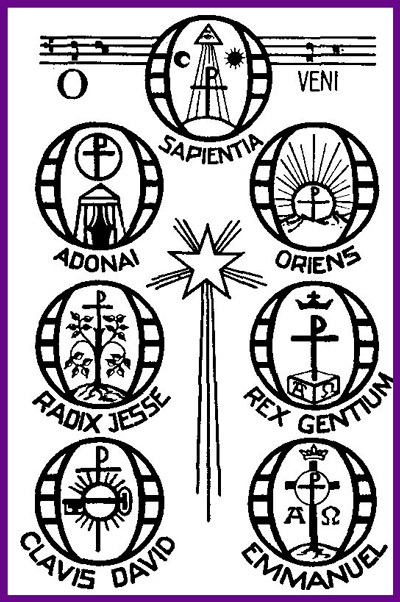
All seven of the ancient O Antiphons are collected beautifully in the Christmas hymn, O Come, O Come, Emmanuel, with lyrical translation by John Mason Neale (1851). Take time today to meditate on these together, perhaps sing the hymn, and then REJOICE!

1 O come, O come, Immanuel,
and ransom captive Israel
that mourns in lonely exile here
until the Son of God appear.

Refrain:
Rejoice! Rejoice! Immanuel
shall come to you, O Israel.

2 O come, O Wisdom from on high,
who ordered all things mightily;
to us the path of knowledge show
and teach us in its ways to go. Refrain

3 O come, O come, great Lord of might,
who to your tribes on Sinai’s height
in ancient times did give the law
in cloud and majesty and awe. Refrain

4 O come, O Branch of Jesse’s stem,
unto your own and rescue them!
From depths of hell your people save,
and give them victory o’er the grave. Refrain

5 O come, O Key of David, come
and open wide our heavenly home.
Make safe for us the heavenward road
and bar the way to death’s abode. Refrain

6 O come, O Bright and Morning Star,
and bring us comfort from afar!
Dispel the shadows of the night
and turn our darkness into light. Refrain

7 O come, O King of nations, bind
in one the hearts of all mankind.
Bid all our sad divisions cease
and be yourself our King of Peace. Refrain

O Emmanuel

Theotokos

Therefore, the Lord himself will give you a sign. Behold, the virgin shall conceive and bear a son, and shall call his name Immanuel. (Isa. 7:14 ESV)

Matthew, in his Gospel, tells us the Hebrew name Immanuel (or Emmanuel) means God with us. There is perhaps no greater promise in Scripture than that. God told Jacob, “Fear not, for I am with you and will bless you….” God made the same promise to Jacob’s offspring by the prophets Isaiah and Jeremiah. Jesus told his disciples that “I am with you always, to the end of the age.” But the climax of this promise in the history of God’s people was the giving of His Son as a child from the womb of Mary. There is no more intimate connection between man and God than that. In the deepest sense of the prophet’s words, Jesus was the promise of God incarnate, God with us.

Rejoice!

O Emmanuel, our king and our lawgiver,
the hope of the nations and their Savior:
Come and save us, O Lord our God.

O Rex Gentium

christ-enthroned

Behold, I am the one who has laid as a foundation in Zion, a stone, a tested stone, a precious cornerstone, of a sure foundation. (Isa. 28:16 ESV)

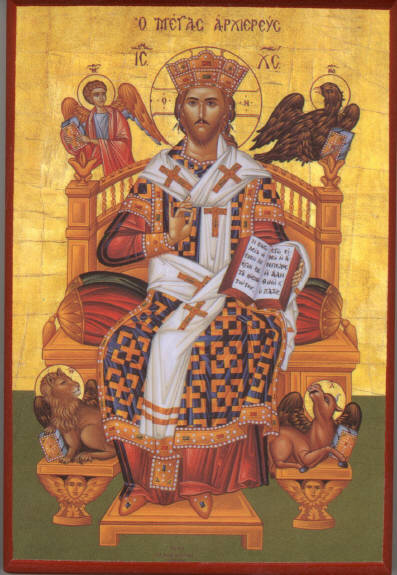
In the sixth O Antiphon, Christ is called the King the nations long for. And he is the cornerstone of a new building. He is the king who gets his hands dirty forming a new people from clay. And he redeems us.

Rejoice!

O King of the nations, and their desire,
the cornerstone making both one:
Come and save the human race,
which you fashioned from clay.

O Oriens

800px-Gerokreuz_full_20050903

Oriens in Latin is the Morning Star, the Dayspring. It calls to mind this verse from Malachi:

But for you who fear my name, the sun of righteousness shall rise with healing in its wings. (Mal. 4:2 ESV)

It is significant that this antiphon is sung on the winter solstice, what Donne called “the year’s midnight.” Day now begins with the sign of the morning star, the spring of the day, the Oriens. So Christ has brought light and life at just the darkest moment. And so He will do for you if you but call on Him.

O Dayspring,
splendor of light eternal and sun of righteousness:
Come and enlighten those who dwell in darkness and the shadow o death.

O Clavis David

38468681964_0a2b9b35cf_b

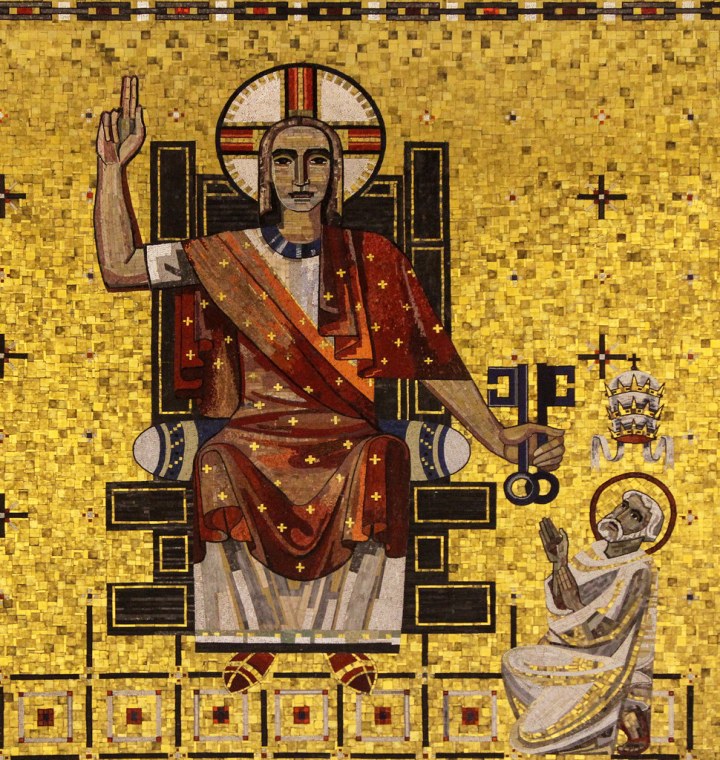
Isaiah said, “And I will place on his shoulder the key of the house of David. He shall open, and none shall shut, and he shall shut, and none shall open.” (Isa. 22:22 ESV)

The hymn O Come, O Come, Emmanuel has this line in verse 5,

O come, O Key of David, come
and open wide our heavenly home.

As the Key of David, Jesus opens to us the way to Heaven, and no one can bar that entrance. He is our access to the Father, and no one can close that way. Rejoice!

O Key of David and scepter of the House of Israel;
you open and no one can shut;
you shut and no one can open:
Come and lead the prisoners from the prison house,
those who dwell in darkness and the shadow of death.

O Radix

12th-century_painters_-_The_Tree_of_Jesse_-_WGA15728

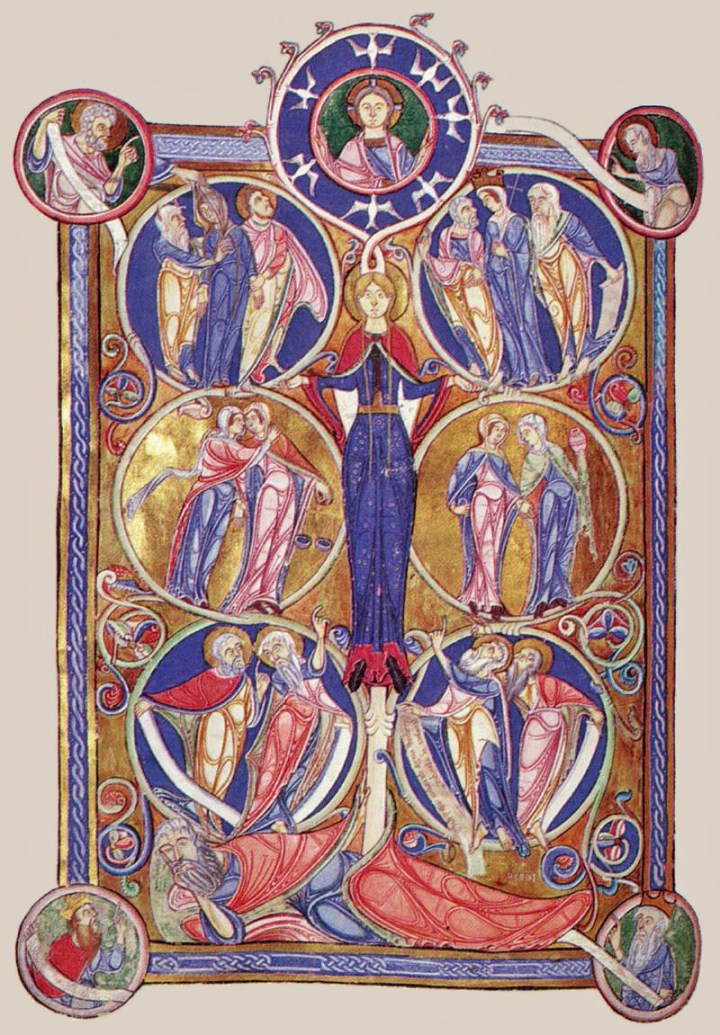
The root of Jesse refers to the family tree of David and to Jesus Christ, both as descendant and source. It also proclaims that Jesus was thoroughly rooted in our humanity and has become the source of life for us, much as root is to flower. Jesus said, “I am the vine and you are the branches.”

O Root of Jesse, standing as a sign among the peoples;
before you kings will shut their mouths,
to you the nations will make their prayer:
Come and deliver us, and delay no longer.

O Adonai

moses_burning_bush_bysantine_mosaic

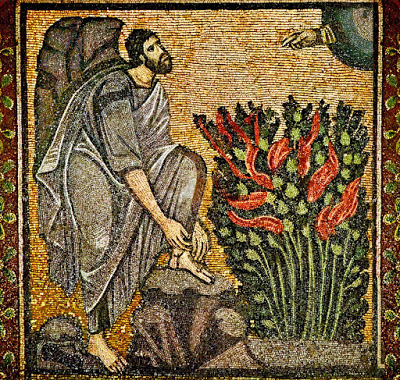
The second of the O Antiphons is O Adonai. Adonai was one of the Hebrew names for God, usually used in place of the unspoken Tetragrammaton. It is most often translated as Lord in our English Bibles. In Jesus God has made Himself fully known to his people and would redeem them from sin and death as He did the people of Israel from Egypt.

O Adonai, and leader of the house of Israel,
who appeared to Moses in the fire of the burning bush
and gave him the law on Sinai:
Come and redeem us with an outstretched arm.

O Sapientia

o_ants_web

The O Antiphons have been in the church’s Advent liturgy since at least the sixth century. A concatenation of several of the antiphons gave rise to the Christmas hymn, O Come, O Come, Emmanuel. The seven antiphons were (and are) traditionally used in the last days of Advent, December 17 through 23. Each is a short prayer to Jesus. May they enrich your Advent this year!

O Wisdom, coming forth from the mouth of the Most High,
Reaching from one end to the other mightily,
And sweetly ordering all things:
Come and teach us the way of prudence.